What Happens in Blade Runner?
Blade Runner synopsis covering the plot, Roy Batty's ending, and the film's themes of memory, identity, and empathy.
Blade Runner is about Rick Deckard hunting escaped replicants in a future Los Angeles, but the reason people still search for a blade runner film synopsis is the ending: the film slowly turns a police assignment into a question about empathy, memory, and what makes a life human. Spoilers matter here, because Roy Batty's final choice and Gaff's unicorn clue change how the whole story feels.
Full Blade Runner plot synopsis
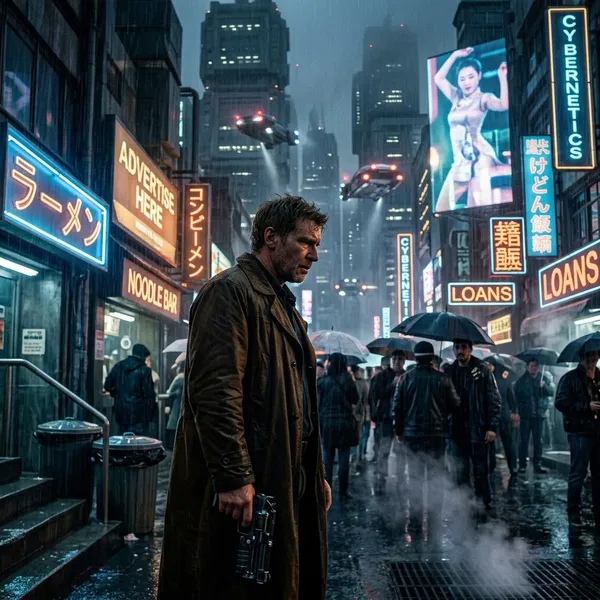
Blade Runner takes place in a polluted, neon-lit Los Angeles in 2019, where bioengineered humans called replicants are banned from Earth. Rick Deckard, a former "blade runner," is pulled back into police work to track four escaped Nexus-6 replicants before they can reach the people who made them.
The plot works on two levels at once. If you only need the story, it is a manhunt. If you are trying to understand why the film is famous, pay attention to three things first: Deckard's growing doubt, Rachael's crisis over her memories, and Roy Batty's desperate search for more life.
Deckard is brought back to hunt four replicants
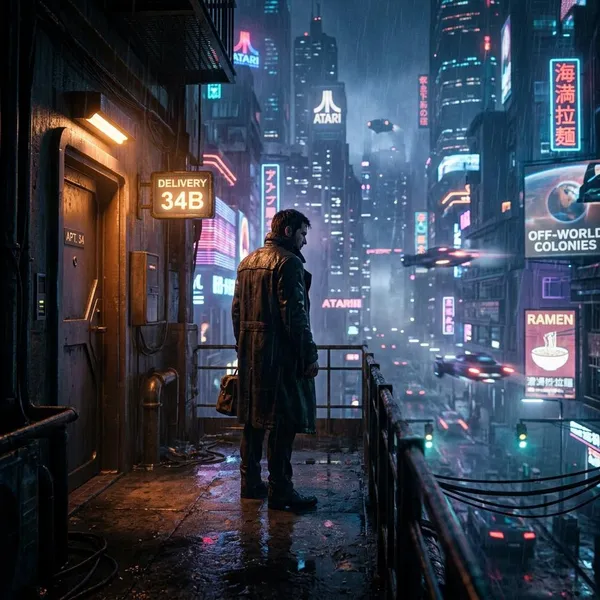
Deckard is found by his old superior, Bryant, and pressured into returning to work. Four replicants have escaped from off-world colonies and come to Earth: Roy Batty, Pris, Leon, and Zhora. They are physically powerful, highly intelligent, and considered illegal simply because they exist on Earth.
Rachael learns the truth about her identity
Deckard visits the Tyrell Corporation, where Eldon Tyrell asks him to test Rachael. She appears human, speaks calmly, and believes she has a normal past. The Voight-Kampff test takes unusually long, but Deckard eventually realizes she is a replicant.
Rachael's memories were implanted from Tyrell's niece, so her childhood stories feel real even though they did not happen to her. For a first-time viewer, this is the point to stop treating the film as a simple chase story. Rachael's pain makes the question practical: if a memory shapes your fear, love, and sense of self, does its source make those feelings less real?
Deckard tracks Leon and Zhora
Deckard searches Leon's apartment and finds clues that lead him toward Zhora, who is hiding under a false identity as a performer. He approaches her with a cover story, but she sees through him and runs into the crowded city streets.
Deckard shoots Zhora as she crashes through glass display windows. The scene is staged less like a heroic victory and more like an ugly public killing, which is important. The film wants the viewer to feel the discomfort of Deckard doing his job, not just the satisfaction of a detective catching a target.
Rachael saves Deckard from Leon
Leon attacks Deckard soon after Zhora's death and nearly kills him. Rachael intervenes by shooting Leon, saving the man who has just exposed her as a replicant. The choice changes the emotional balance of the story: Deckard survives because one of the beings he is supposed to fear shows loyalty and compassion.
Roy and Pris continue searching for answers
While Deckard follows the police trail, Roy and Pris look for a way to reach Tyrell. Their real goal is not conquest or chaos; they want to know whether their four-year lifespan can be extended.
Pris befriends J.F. Sebastian, a lonely genetic designer who works for Tyrell and has his own condition that makes him age prematurely. This connection gives Roy access to Tyrell, but it also gives the replicants a sad mirror: Sebastian, like them, understands what it means to live under a body's limit.
Roy confronts Tyrell about his limited lifespan
Roy finally meets Tyrell and asks for more life. Tyrell explains that the Nexus-6 lifespan cannot be safely changed. His answer is polished, almost admiring, but it offers Roy no mercy and no real responsibility for the suffering Tyrell helped create.
Roy kills Tyrell after realizing there is no solution. The murder is brutal, but the scene is not only about rage. It is a confrontation between a created being and a creator who praises his design while refusing to answer for its cost.
Deckard faces Pris and Roy
Deckard arrives at Sebastian's building and finds Pris waiting. She attacks him with sudden speed and acrobatic force, and Deckard kills her after a frantic struggle. When Roy discovers Pris dead, the final chase begins.
Roy hunts Deckard through the decaying building, but the scene is not a normal hero-versus-villain climax. Deckard is terrified and physically outmatched, while Roy is powerful but visibly running out of time. If you are rewatching the film for its ending, this is the key setup: the hunter becomes helpless before the person he came to kill.
Roy saves Deckard before dying
Deckard slips from a rooftop and is about to fall. Roy catches him, pulls him up, and saves his life. He then sits in the rain and delivers his "tears in rain" speech, reflecting on memories and experiences that will disappear when he dies.
Deckard leaves with Rachael
Deckard returns to his apartment and finds Rachael alive. Gaff has been there, but he has not killed her. Deckard then finds Gaff's origami unicorn, a small object that suggests Gaff knows more about Deckard than he should.
Deckard leaves with Rachael instead of returning to his role as a blade runner. The escape is not a neat happy ending, especially in the later cuts, but it is a clear personal choice. Deckard chooses an uncertain life with Rachael over obedience to a system that treats replicants as disposable.
How does Blade Runner end?
Blade Runner ends with Roy Batty saving Deckard, dying in the rain, and Deckard escaping with Rachael after finding Gaff's origami unicorn. The ending closes the plot, but it deliberately leaves the biggest interpretation open: Deckard may have changed because of what he witnessed, or he may also be part of the mystery he thought he was investigating.
Roy chooses to save Deckard
Roy saves Deckard at the exact moment revenge would be easiest. Deckard has killed Zhora and Pris, and he has spent the film hunting Roy's group. Letting him fall would require no effort, but Roy pulls him to safety instead.
The choice matters because it is active mercy, not just a refusal to kill. Roy uses his final strength to preserve another life, which undercuts the film's official categories. The "replicant" acts with more grace than the human institutions that created and hunted him.
Roy accepts his approaching death
After saving Deckard, Roy stops fighting the inevitable. His final speech is not a request, a threat, or a victory line. It is a brief mourning for everything he has seen and everything that will vanish with him.
- For the plot: Roy dies because his built-in lifespan has reached its end.
- For the meaning: he recognizes the value of life precisely because it is temporary.
- For Deckard: the death forces him to see a replicant as a conscious being, not a target.
Deckard finds Gaff's origami unicorn
The origami unicorn has two practical meanings. First, Gaff has been inside Deckard's apartment and spared Rachael, so the couple's escape begins under a warning rather than a guarantee of safety. Second, in cuts that include Deckard's unicorn dream, the object suggests Gaff may know Deckard's private thoughts.
That second meaning is why the unicorn is so heavily discussed. If Gaff knows the dream, Deckard's memories may be implanted, just like Rachael's. The film does not confirm this outright, and the uncertainty is the point.
Deckard escapes with Rachael
Deckard and Rachael leave together because he no longer accepts the rules of his job. The scene is intimate rather than triumphant: no public rebellion, no clear destination, no promise that they will be safe. For viewers who want a simple answer, they escape. For viewers looking at the film's themes, Deckard is choosing empathy over the identity the system gave him.
What does the Blade Runner ending mean?
The ending suggests that humanity is not proven by biology alone. Roy's mercy, Rachael's fear, and Deckard's final choice all point toward a different standard: the ability to feel, remember, suffer, care, and recognize another life as valuable.
Humanity is defined through empathy
The Voight-Kampff test is supposed to detect replicants by measuring emotional response, but the story quietly turns that idea against the human world. Many humans in the film are cold, commercial, or detached, while the replicants show fear, attachment, grief, and mercy.
Roy's decision to save Deckard is the clearest example. It is not a sentimental moment added after the action; it is the film's moral center. If empathy is the test, Roy passes it when it matters most.
Memories shape personal identity
Rachael's memories are artificial, but her reaction to losing them is real. She grieves because those memories gave her a personal history, a family connection, and a stable idea of who she was.
Deckard's possible replicant identity extends the same idea to the viewer. If his memories might also be designed, the film asks whether identity comes from where a memory came from or from how a conscious person lives with it.
Mortality gives life greater meaning
Roy's short lifespan makes his final speech so painful. He has seen extraordinary things, but he cannot keep them, share them fully, or extend the life that contains them. His memories will be lost "like tears in rain."
Deckard's identity remains deliberately uncertain
The film never gives a final answer about Deckard. The theatrical cut makes him feel more like a conventional human detective, while later cuts make the replicant reading harder to ignore. Ridley Scott has leaned toward Deckard being a replicant, while Harrison Ford has argued the opposite, which reflects the tension built into the film itself.
How do the different Blade Runner cuts affect the story?
The different cuts change how much the film explains and how strongly it pushes the mystery around Deckard. If you are watching for the first time and want the version most people now treat as definitive, the Final Cut is usually the best choice. If you are studying how the story changed over time, compare it with the theatrical cut.
| Cut | Best if you want | Main effect on the story |
|---|---|---|
| Theatrical cut | More explanation | Voice-over and a softer ending make Deckard feel more like a classic noir hero. |
| Director's Cut | More ambiguity | No narration, no happy ending, and the unicorn dream shift attention toward Deckard's identity. |
| Final Cut | The cleanest modern viewing | Sharper presentation and stronger unicorn imagery make the mystery feel more deliberate. |
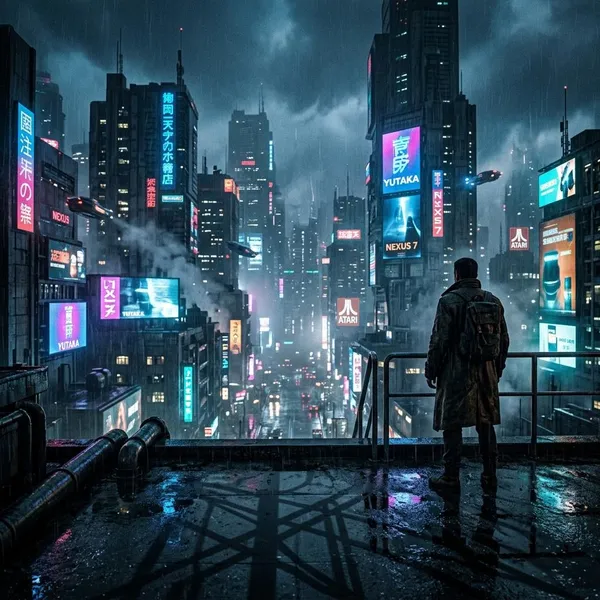
The theatrical cut adds narration and a different ending
The theatrical cut includes Deckard's voice-over, which explains parts of the investigation and gives the film a more obvious hard-boiled detective style. That can help a viewer who mainly wants plot clarity, but it also reduces some of the silence and uncertainty that later versions protect.
Its ending is also more optimistic, with a stronger sense that Deckard and Rachael have escaped into open space. That version makes the story feel more closed and less troubling, which is exactly why many fans prefer the later cuts.
The Director's Cut removes the voice-over
Without the voice-over, Deckard becomes less easy to read. The viewer has to pay attention to images, pauses, and behavior instead of being guided by narration.
The Final Cut strengthens the unicorn imagery
The Final Cut keeps the darker, more ambiguous shape of the Director's Cut while presenting the film in its most polished form. Visual and sound improvements matter here because Blade Runner communicates so much through atmosphere: city lights, eye reflections, shadows, smoke, and silence.
The cuts change how viewers interpret Deckard
The version you watch can shape whether Deckard feels like a tired human detective or a possible replicant who does not know what he is. The theatrical cut gives him more interior narration, which makes him feel stable and familiar. The later cuts remove that comfort and place more weight on the unicorn clue.
Neither viewing path is useless. A first-time viewer may appreciate the theatrical cut's clarity, while a rewatch or film-class viewing usually benefits from the Final Cut's ambiguity. The important mistake to avoid is assuming all versions lead to the same emotional conclusion; they do not.
Conclusion
Blade Runner begins as a hunt for four escaped replicants, but its lasting power comes from the way the hunt collapses into doubt. Roy's mercy, Rachael's manufactured memories, and Deckard's uncertain identity all push the same practical judgment: the film is less interested in who counts as human on paper than in who acts with awareness, empathy, and care when life is running out.
FAQS
What are replicants in Blade Runner?
Replicants are bioengineered humans made for labor, especially in off-world colonies. The important detail is that they are not simple robots; the advanced models can think, feel, fear death, and pass as human in ordinary life.
Why does Roy Batty save Deckard?
Roy saves Deckard because his final act is mercy rather than revenge. It shows that Roy understands the value of life at the moment he is losing his own.
Is Deckard a replicant?
The film leaves Deckard's identity unresolved. The Final Cut makes the replicant theory stronger through the unicorn dream and Gaff's origami unicorn, but the story still works if you read him as human.
Is Blade Runner based on a book?
Yes. Blade Runner is based on Philip K. Dick's 1968 novel Do Androids Dream of Electric Sheep?, though the film changes many plot details and leans more heavily into noir atmosphere and visual world-building.