What Happens in Black Butterfly?
Get a clear black butterfly film synopsis, plus the plot twist, ending, main characters, and themes explained in simple terms.
If you need the black butterfly film synopsis because the ending felt confusing, the short version is this: Paul, a blocked writer living alone in a remote cabin, lets a stranger named Jack into his life, and that decision turns into a tense battle of fear, control, and hidden guilt. The film plays like a cabin thriller at first, but its final twist changes how Paul, Jack, and the murders around town should be understood.
What happens in Black Butterfly?
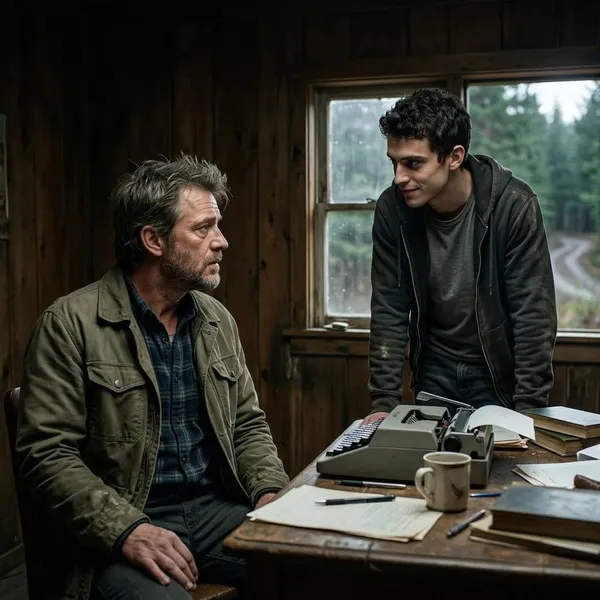
Black Butterfly starts with Paul as a struggling, alcoholic screenwriter living in an isolated home near a town troubled by a murder investigation. He is broke, blocked, and already close to losing control of his life before Jack appears. That matters because Jack does not create Paul's weakness from nothing; he walks straight into it.
Paul meets Jack and invites him home
Paul meets Jack after a tense encounter in town, where Jack steps in and leaves a strong impression. Paul later invites him back to the cabin, partly as thanks and partly because Jack seems like the kind of dangerous, vivid person a stalled writer might find useful.
This is Paul's first big mistake, but it is not random. If you watch the film as a simple thriller, it looks like poor judgment. If you watch it after knowing the ending, the invitation also feels like the start of a story Paul wants, fears, or needs to tell.
Jack begins taking control of the cabin
Jack quickly stops feeling like a guest. He comments on Paul's habits, pushes into his private space, and uses confidence as a weapon before the threat becomes openly physical.
Their writing project becomes a psychological battle
The writing scenes are not just filler around the thriller plot. Jack pressures Paul to write, but the work begins to feel like interrogation rather than collaboration. What Paul puts on the page starts to matter because the film keeps connecting fiction, confession, and guilt.
Violence and suspicion push Paul toward escape
As Jack becomes more threatening, Paul begins to suspect he may be connected to the killings nearby. The storm, the remote cabin, and Paul's fragile state make escape feel difficult even before violence fully takes over.
This is the section that works best if you enjoy contained thrillers: two people, one house, limited help, and no easy way to decide who is telling the truth. A viewer who wants a realistic police procedural may find it stretched, but someone looking for a tense psychological setup will understand why the film keeps the focus so narrow.
The final act reveals what was really happening
The final act turns the story away from a normal "dangerous stranger" plot. Jack is not merely a random drifter, and Paul is not merely an unlucky victim. The reveal forces viewers to look back at the writing, the murders, and Paul's behavior as pieces of a larger deception.
Who are the main characters?
The film keeps its cast tight, which is why the cabin tension dominates. Paul and Jack carry most of the psychological conflict, while Laura and the local police keep the story connected to life outside the house. When reading the film's ending, each character has a specific job: Paul hides instability, Jack applies pressure, Laura shows what Paul's normal life has damaged, and the police connect the private conflict to the public crimes.
Paul as the troubled writer
Paul is the center of the story and the most important person to question. He appears vulnerable: blocked, isolated, drinking too much, and unable to get his career or personal life moving. The film encourages sympathy for him, but it also plants enough doubt that his version of events should not be accepted too easily.
His writer's block is practical as well as symbolic. He needs a story, he needs money, and he needs control over a life that feels like it is slipping away. That combination makes him open to Jack's influence and also makes his own storytelling suspicious.
Jack as the mysterious drifter
Jack enters as the obvious threat: aggressive, observant, and far too comfortable inside another man's home. On a first watch, he looks like the kind of drifter who might be connected to the local murders.
After the reveal, Jack's role becomes more complicated. His menace is still real inside the drama of the cabin, but his purpose is tied to exposing what Paul is hiding rather than simply terrorizing him for no reason.
Laura as part of Paul's outside life
Laura shows that Paul's problems did not begin when Jack arrived. She connects him to failed relationships, ordinary responsibilities, and a world beyond the isolated cabin. Her scenes give the story a useful contrast: Paul is not only trapped by Jack; he has already failed to live normally outside that pressure.
Local police tied to the wider mystery
The police matter because the movie is not only about two men in a cabin. Their investigation keeps the murders and disappearances in view, so the viewer keeps asking whether Jack, Paul, or someone else is responsible.
How does Black Butterfly end?
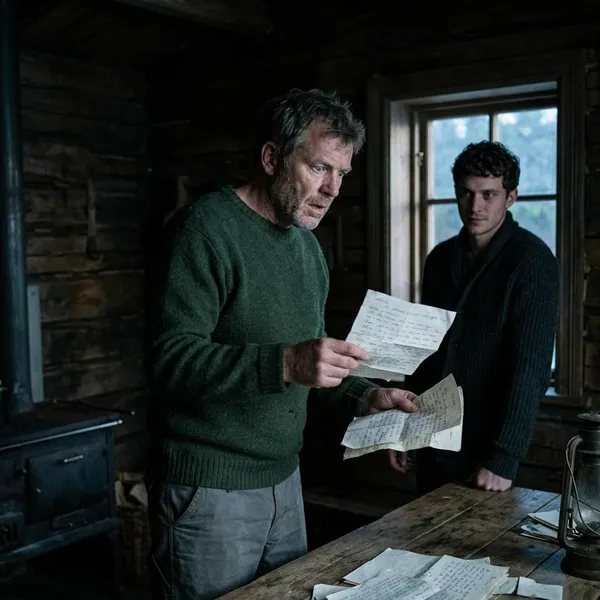
Black Butterfly ends with a twist that reveals Paul is not the simple victim he seemed to be. The confrontation with Jack appears to settle the cabin threat, but the real point of the ending is to expose the hidden truth behind Paul's story and the crimes surrounding him.
Paul survives the confrontation
Paul survives the direct conflict, but survival is not the same as innocence. The film uses the familiar rhythm of a thriller climax, then shifts attention from "Can Paul escape?" to "What has Paul been hiding?"
Jack's true role is revealed
Jack's true role is the central twist: he is not just a wandering stranger who randomly attached himself to Paul. He is connected to the investigation and has been pushing Paul in order to uncover the truth. That makes many earlier scenes play differently, because Jack's pressure was not only sadistic intimidation; it was also a way to force Paul toward exposure.
The film still keeps a pulpy, twist-heavy style, so not every detail lands with documentary realism. The practical takeaway is clear enough, though: Jack was positioned as the obvious monster so the film could hide the more important danger around Paul.
The ending reframes the entire story
The ending reframes Paul's writing as more than a blocked artist's struggle. It becomes part of the film's game with confession, invention, and self-protection. What looked like material for a screenplay starts to feel like a distorted route toward the truth.
For a viewer deciding whether to rewatch, this is where a second viewing helps most. Early conversations that first seemed like Jack bullying Paul can be read as pressure tests, and Paul's fear can be read as more than ordinary panic.

What are the main themes?
The main themes are isolation, paranoia, manipulation, creativity, and the unstable line between reality and storytelling. None of them sit outside the plot. The remote cabin gives isolation a physical shape, Jack turns control into a daily threat, and Paul's writing turns the truth into something that can be edited, hidden, or performed.
Isolation and paranoia
Paul's cabin is useful for the thriller because help feels far away, but the deeper isolation is emotional. He has little stability, little trust, and few people who can interrupt the spiral once Jack enters his home.
The paranoia works differently depending on how you watch. Before the twist, it makes Jack look dangerous. After the twist, it also makes Paul look unstable and possibly self-protective, which gives the same scenes a sharper edge.
Control and manipulation
Control starts in small ways: Jack's tone, his questions, his refusal to act like a normal guest. The film understands that domination does not need to begin with violence. Sometimes it begins when one person keeps pushing and the other keeps making room.
- Jack controls space by making the cabin feel like his territory.
- He controls conversation by turning casual talk into pressure.
- He controls Paul's fear by letting danger remain uncertain.
Creativity and writer's block
Paul's writer's block is not treated as a cute artistic problem. It has made him desperate, ashamed, and easier to provoke. That is why Jack's interest in the writing project feels both useful and threatening.
Reality versus storytelling
The strongest theme is the fight between what happened and how it gets told. Because Paul is a writer, the film keeps asking whether narrative is revealing truth or covering it up. The ending matters because it turns that question back on everything the audience has just watched.
Conclusion
Black Butterfly works best if you approach it as a twisty psychological thriller rather than a clean crime mystery. The important thread is not only whether Jack is dangerous, but why Paul is so easy to corner and what his writing reveals about him. If you enjoy contained cabin tension and endings that make you recheck earlier scenes, it is worth watching; if you dislike late twists that reshape the whole plot, the final act may feel more frustrating than satisfying.
FAQS
Does Black Butterfly have a twist ending?
Yes. The twist reveals that the cabin conflict was not simply about a drifter terrorizing a writer, and it forces a different reading of Paul's behavior.
Is Black Butterfly based on another film?
Yes. Black Butterfly is based on the French film Papillon Noir, using the same core idea of a writer, a stranger, and a dangerous psychological setup.
Is Black Butterfly worth watching?
Yes, if you like tense two-person thrillers with an unreliable-story angle. It is less ideal if you want a grounded murder mystery where every reveal feels strictly realistic.