What Really Happened in Bohemian Rhapsody?
Get a clear bohemian rhapsody film synopsis with plot, ending, true-story changes, and key themes. Read more for a simple breakdown.
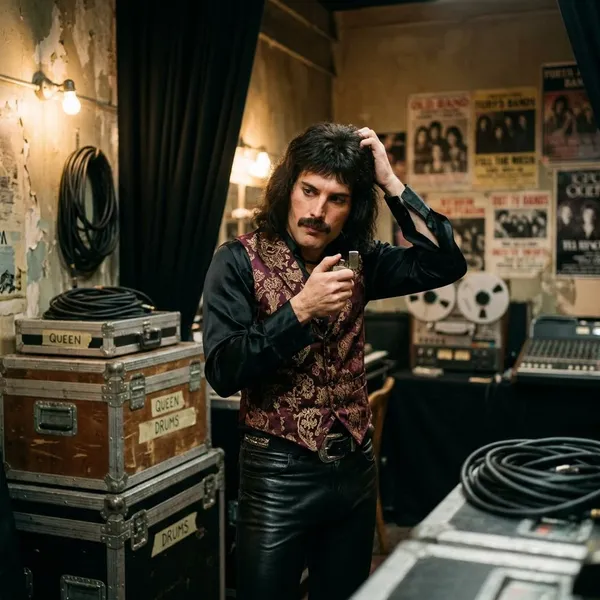
Bohemian Rhapsody is a dramatized story of Freddie Mercury and Queen, ending with the band's famous Live Aid performance rather than trying to cover every part of their history. A useful bohemian rhapsody film synopsis should treat the movie as two things at once: a crowd-pleasing tribute to Queen's music and a simplified version of real events.
What is Bohemian Rhapsody about?
The film follows Freddie Mercury from his early life before fame to Queen's rise as one of the biggest rock bands in the world. Its main dramatic question is not just whether Queen will become successful, but whether Freddie can find belonging while fame, secrecy, ego, and pressure pull him away from the people closest to him.
If you have not seen the movie yet, expect a music biopic with a clear emotional arc. If you have already watched it and feel unsure what was factual, the safest way to read the plot is this: the big milestones are real, but the movie reshapes the timeline to make Freddie's personal journey build neatly toward Live Aid.
Freddie Mercury joins the band that becomes Queen
The story begins with Freddie working at Heathrow Airport and watching the band Smile perform. When Smile loses its lead singer, Freddie approaches Brian May and Roger Taylor, showing the boldness and theatrical confidence that will later define him on stage.
John Deacon later completes the lineup, and the group becomes Queen. The film uses this early section to show Freddie building more than a career: he is shaping his name, image, sound, and public identity.
Mary Austin is introduced as one of Freddie's most important emotional anchors. Their relationship gives the beginning of the film a quieter contrast to the noise of clubs, rehearsals, and ambition.
Queen rises to international fame
Queen's rise is shown through touring, recording, and the band's refusal to make safe, ordinary rock music. The creation of "Bohemian Rhapsody" becomes a key moment because the song looks risky on paper: too long, too strange, and too hard to categorize for a conventional single.
- For casual viewers: this section explains why Queen stood out so quickly.
- For music fans: it highlights the band's creative stubbornness more than the full recording history.
- For fact-checkers: the emotional point is accurate, even when the movie simplifies how events unfolded.
The film presents success as thrilling but unstable. Bigger crowds and bigger songs bring Queen fame, but they also increase the pressure on Freddie and the band's relationships.
Fame and personal struggles test the band
As Queen becomes more famous, Freddie becomes more isolated. The movie shows him facing public attention, private confusion, strained relationships, and people around him who do not always protect his best interests.
The band tension is just as important as the personal drama. Freddie's solo ambitions, the group's arguments, and the emotional distance between members all push the story toward a low point before the final reunion.
Live Aid becomes the film's climax
Live Aid is the film's emotional finish line. The concert is not treated as just another famous performance; it becomes the moment where Queen's music, Freddie's need for connection, and the band's repaired bond come together.

Is Bohemian Rhapsody based on a true story?
Yes, Bohemian Rhapsody is based on real people, real songs, and real milestones in Queen's career. The important caution is that it is not a strict documentary. It compresses years of events, rearranges some timelines, and sharpens conflict so the story has a clearer movie shape.
Queen's rise and Live Aid are real
Freddie Mercury, Brian May, Roger Taylor, and John Deacon really did form the classic Queen lineup and become internationally successful through distinctive recordings and major live performances. The film captures the band's scale, theatricality, and creative confidence well enough for a first overview.
Live Aid also happened in 1985, and Queen's set is widely remembered as one of the event's standout performances. The movie's recreation is central because it gives viewers a clear image of why Freddie's stage presence mattered so much.
The band's breakup is exaggerated
The movie makes Queen's pre-Live Aid distance feel more dramatic and final than it was in real life. The band had tensions, but they had not broken up in the clean, movie-style way the story suggests.
This matters if you are watching for history rather than emotion. The exaggerated split makes the Live Aid reunion feel more powerful on screen, but it can leave viewers with the wrong impression that Queen had to be completely repaired before they could perform together.
Freddie's diagnosis timeline was changed
One of the biggest historical changes is the timing of Freddie Mercury's AIDS diagnosis. In the film, Freddie appears to know his diagnosis before Live Aid and tells the band during that period; historically, that timing is widely considered inaccurate.
The change gives the final concert extra emotional weight, but it also turns a later part of Freddie's life into part of the Live Aid build-up. If accuracy matters for a class, review, or discussion, this is the first timeline change to mention.
Some personal events were dramatized
Several relationships and conflicts are condensed so the audience can follow them quickly. Mary Austin, Jim Hutton, Paul Prenter, Freddie's family, and the music-business figures around Queen are all used to sharpen the emotional story, not to document every detail exactly.
| What to take from the film | What to be cautious about |
|---|---|
| Freddie's bond with Mary was deeply important. | The timeline of his private life is simplified. |
| Queen challenged expectations with unusual songs. | Industry conflicts are made cleaner and more dramatic. |
| Freddie experienced loneliness despite fame. | Some scenes work like emotional composites rather than precise records. |
How does Bohemian Rhapsody end?
Bohemian Rhapsody ends with Queen performing at Live Aid, followed by closing text about Freddie Mercury's later life and legacy. The final act is designed to feel triumphant first and bittersweet afterward.
The key to the ending is reconciliation. Freddie does not simply walk onto a stage and sing well; he returns to Queen, reconnects with people he has hurt or drifted from, and performs as if music is the place where all the broken parts of his life briefly come together.
Freddie reconciles with Queen
Before Live Aid, Freddie admits his mistakes and repairs his relationship with Brian, Roger, and John. The film frames Queen as more than a professional arrangement, so this moment is necessary before the performance can feel emotionally complete.
His personal life is also softened in the final stretch. The movie shows him moving toward more honesty with himself and with people close to him, which makes the ending feel less like a comeback stunt and more like a return to connection.
The band takes the stage at Live Aid
The Live Aid sequence begins with the band walking out at Wembley, and the film slows down enough to make the moment feel earned. The camera treats the stage almost like a final test: Queen must prove not only that they can still perform, but that they still belong together.
For someone watching mainly for the plot, this is the payoff. For someone watching as a Queen fan, it is also the movie's largest act of recreation, built around the energy and rhythm of the real performance.
Freddie leads the Wembley crowd
Freddie's command of the crowd is the emotional high point of the ending. His call-and-response with Wembley shows why he was not just a singer with a strong voice, but a performer who could make a stadium feel involved.
- He controls the pace: the crowd waits for him and answers him.
- He creates intimacy at scale: thousands of people feel like part of one exchange.
- He becomes the image the film wants to leave behind: alive, theatrical, vulnerable, and in control.
The closing text reflects on his legacy
After the concert, the closing text notes Freddie Mercury's death in 1991 from AIDS-related pneumonia and points to his continuing legacy. It also references the Mercury Phoenix Trust, created in his memory to support the fight against AIDS.
That final note changes the emotional temperature. The performance ends in celebration, but the text reminds viewers that the real story continued into illness, loss, and remembrance.
What are the main themes of Bohemian Rhapsody?
The film's main themes are fame, identity, friendship, reconciliation, music, and legacy. The soundtrack makes the movie entertaining, but those themes explain why the story still works for viewers who come in knowing only a few Queen songs.
The strongest reading is that Bohemian Rhapsody is about the cost of becoming extraordinary. Freddie gains recognition, money, and a massive audience, yet the film keeps asking whether success means much if it separates him from trust, love, and self-acceptance.
Fame and ambition
Ambition pushes Queen to take creative risks. The film clearly admires the band's refusal to sound ordinary, especially when "Bohemian Rhapsody" is presented as a song that should not work commercially but does.
At the same time, fame is shown as dangerous when it removes honest feedback. The practical lesson is simple: the movie celebrates big artistic confidence, but it does not pretend applause is the same as stability.
Identity and belonging
Freddie's identity is shaped through family expectations, his Parsi background, sexuality, performance, and fame. The film does not explore every part of this with equal depth, but it makes his search for belonging the emotional center of the story.
Different viewers may notice different parts of this theme. A casual viewer may focus on Freddie trying to find love and loyalty; someone watching more closely may see how often he changes himself in public while still wanting to be accepted in private.
Friendship and reconciliation
Queen's friendship is tested by ego, fame, and distance, but the film keeps returning to the idea that the band is a chosen family. That is why the final reunion matters more than a normal career comeback.
Reconciliation also gives the movie a softer ending than a pure tragedy would. It lets Freddie be remembered through repair and performance, not only through conflict or illness.
Music and legacy
Music is the film's main form of memory. Queen's songs are used to show personality, ambition, conflict, and release, not just to decorate the plot.
Conclusion
Bohemian Rhapsody works best when watched as an emotional tribute, not as a perfectly ordered history lesson. The film gives a clear, satisfying version of Freddie Mercury and Queen's rise, but the smartest reading is to enjoy the Live Aid payoff while remembering that some of the most dramatic turns were reshaped for cinema.
FAQS
Did Rami Malek actually sing in Bohemian Rhapsody?
Not entirely. The finished vocals combine Freddie Mercury recordings, singer Marc Martel's voice, and elements connected to Rami Malek's performance, while Malek provides the acting, movement, and physical stage presence.
Does Bohemian Rhapsody end with Live Aid?
Yes. The main story ends with Queen's 1985 Live Aid set, then closing text adds brief context about Freddie Mercury's later death and legacy.
Did Queen really break up before Live Aid?
No. The film makes the separation look much more dramatic than it was, mainly to create a stronger reunion arc before the final concert.
What happened to Queen after Freddie Mercury died?
Queen's surviving members continued preserving and performing the band's music in different forms. Freddie's legacy also continued through tributes, releases, and AIDS-related charitable work connected to the Mercury Phoenix Trust.