What Happens in Black Swan and What Does It Mean?
Get a clear black swan film synopsis with the full plot, ending, and themes explained in simple terms. Read more and understand it fast.
Black Swan follows Nina Sayers, a technically brilliant ballerina whose dream role becomes the thing that breaks her. Cast as the Swan Queen in Swan Lake, she can easily play the innocent White Swan but struggles to reach the darker, freer side of the role. The plot moves from professional pressure into hallucination, paranoia, self-harm, and a final performance where Nina believes she has achieved perfection.
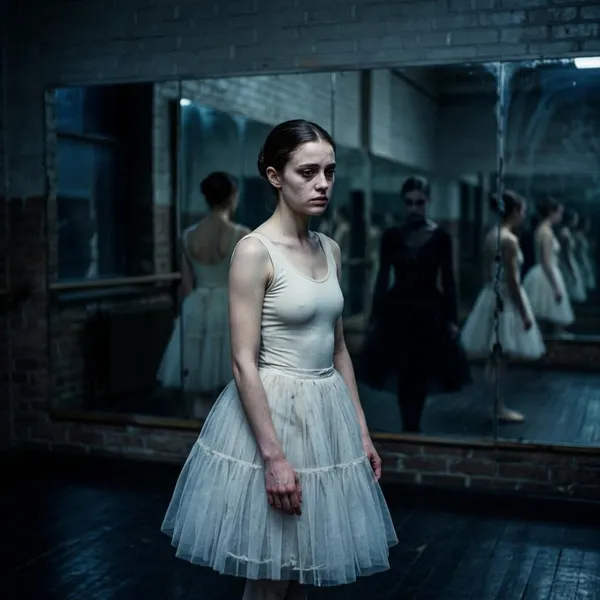
What happens in Black Swan?
The simplest way to read the story is as a collapse under pressure. Nina gets the role she has trained for, but the part demands more than clean technique. She must show innocence and danger in the same performance, and that challenge exposes everything she has repressed: desire, anger, fear, rivalry, and independence.
Nina is chosen to play the Swan Queen
Nina's major break comes when Thomas Leroy casts her as the Swan Queen in a new production of Swan Lake. She is an obvious match for the White Swan because she is precise, delicate, obedient, and disciplined. The problem is that the same dancer must also perform the Black Swan, who requires seduction, looseness, confidence, and danger.
Thomas pushes her beyond her controlled style
Thomas sees Nina's talent, but he also sees how trapped she is by control. He wants her to stop dancing as if every movement is being corrected in her head and start performing with instinct. His artistic criticism is clear, but his methods are invasive: he embarrasses her, manipulates her, and crosses personal boundaries while presenting it as mentorship.
Lily becomes a rival and source of obsession
Lily enters the story as everything Nina is not: relaxed, sensual, sociable, impulsive, and less afraid of imperfection. Thomas notices those qualities, which makes Nina fear that Lily could replace her. At the same time, Nina is drawn to Lily because Lily seems to live with the freedom Nina has never allowed herself.
This is where the film becomes slippery. Lily is real, but Nina's version of Lily is not always reliable. When Lily seems seductive, threatening, careless, or cruel, the viewer has to ask whether Lily is actually behaving that way or whether Nina is projecting her own fear and desire onto her.
Nina's hallucinations and paranoia intensify
Nina's breakdown shows up through body horror and distorted perception. She sees scratches, feathers, strange reflections, doubles of herself, and moments where other people seem to turn into versions of her. These images are not random scares; they show her losing the boundary between performance and identity.
- Mirrors: Nina's reflections often behave strangely, suggesting a split self.
- Feathers and skin: her body seems to transform as she tries to "become" the Black Swan.
- Lily and Beth: other dancers become screens for Nina's fear of replacement and failure.
- Ordinary moments: casual interactions begin to look like threats because Nina's judgment is breaking down.
Opening night ends in a devastating transformation
Opening night brings together the ballet plot and Nina's psychological collapse. She begins under pressure, makes mistakes, and then reaches the wild, dangerous energy Thomas wanted from her. Her Black Swan performance is thrilling because she finally appears free, but that freedom has come through delusion rather than health.
Backstage, Nina believes she fights Lily and stabs her with a shard of broken mirror. After dancing the Black Swan, Lily appears alive, and Nina realizes she has wounded herself. She still finishes the ballet's final death scene as the White Swan, turning the performance into both an artistic triumph and a real physical tragedy.
Who are the main characters?
The main characters are best understood by how they affect Nina's sense of self. None of them is just a plot function. Each one represents a pressure she cannot manage: the need to be perfect, the pull toward freedom, the demand to transform, and the home life that keeps her emotionally trapped.
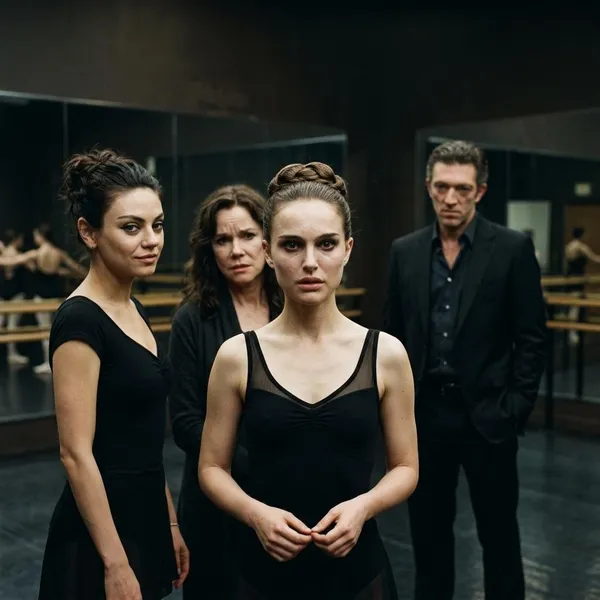
Nina as the perfectionist ballerina
Nina is talented, disciplined, and painfully dependent on approval. Her tragedy is not that she lacks skill; it is that skill has become her whole identity. She has built a life where mistakes feel unbearable and obedience feels safer than self-knowledge.
Lily as her freer and darker counterpart
Lily is Nina's opposite without being a simple villain. She dances with a looseness Nina envies, and she seems comfortable with pleasure, flirtation, and imperfection. To Nina, that makes Lily both a rival and a fantasy of what she might become if she stopped controlling every part of herself.
Thomas as the demanding artistic director
Thomas is the director who gives Nina the role and then pushes her toward the side of herself she fears most. His notes about the role are not meaningless: Nina really is too controlled for the Black Swan at first. The danger is the way he turns artistic direction into psychological pressure and sexualized manipulation.
Erica as Nina's controlling mother
Erica, Nina's mother, keeps Nina in a childlike emotional state. She manages her routines, invades her privacy, and frames control as care. Because Erica is a former ballerina, her love is mixed with disappointment, sacrifice, and the career she did not fully have.
This home life matters because Nina is not only pressured at work. She has very little space anywhere to become an adult, make mistakes, or define herself apart from someone else's expectations.
How does Black Swan end?
The ending is tragic because Nina gets exactly what she wanted and loses herself in the process. By opening night, she no longer experiences the ballet as a performance. She experiences it as a life-or-death transformation.
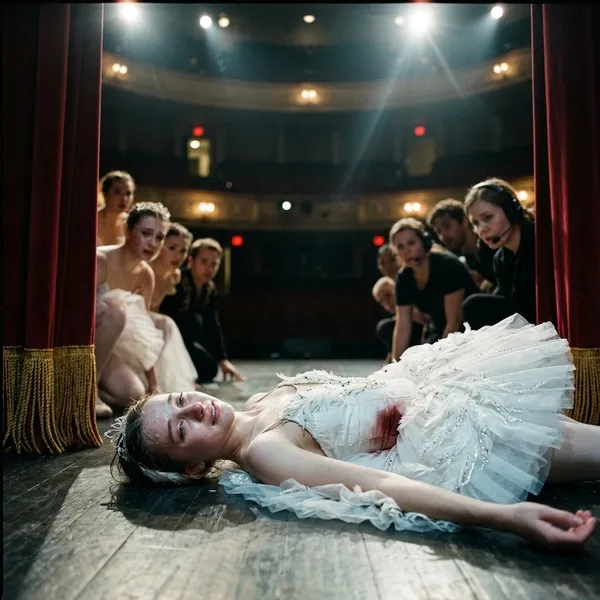
Nina believes she attacks Lily backstage
In Nina's mind, Lily has become the final obstacle between her and perfection. The dressing-room confrontation plays like a jealous thriller scene, but it is really Nina's inner conflict taking physical shape. By attacking Lily, she believes she is destroying the freer, darker presence that threatens her role.
She realizes she actually injured herself
The reveal comes when Lily appears alive after the Black Swan sequence. Nina looks down and understands that the wound is in her own body. The broken mirror matters because mirrors have followed her throughout the film as signs of a divided identity.
This twist changes the meaning of the violence. Nina was never simply fighting another dancer. She was turning her impossible standard inward, punishing the parts of herself she could not accept or control.
She completes the final performance
Nina chooses to finish the ballet even after discovering the injury. That choice is disturbing because it shows how completely her identity has fused with the role. Stopping would mean being a wounded person who needs help; continuing lets her remain the Swan Queen until the final moment.
The film ends with Nina declaring perfection
Nina's last line, "I was perfect," is not a peaceful statement. It is the clearest expression of what has ruled her all along. She does not measure the ending by safety, happiness, or survival. She measures it by whether the performance reached the impossible standard she had been chasing.
The film strongly suggests that the achievement is fatal. It does not pause for medical certainty, but the wound, the staging, and the final white light all point toward death or at least a catastrophic collapse.
What are the main themes in Black Swan?
Black Swan uses ballet as a pressure chamber. The themes are not separate from the plot; they are built into Nina's body, home, rehearsals, and final performance. The most useful way to think about them is to ask what Nina is never allowed to do: relax, fail, want, separate, or be unfinished.
Perfectionism and obsession
Perfectionism drives Nina because excellence is not enough for her. A normal mistake becomes evidence that she is unworthy. A correction from Thomas becomes a personal crisis. A rival dancer becomes a threat to her entire identity.
That distinction matters. Healthy ambition can survive feedback and failure. Nina's obsession cannot. Once perfection becomes the only acceptable outcome, every part of life turns into surveillance: her body, her technique, her sexuality, her home, and even her thoughts.
Identity and duality
The White Swan and Black Swan are the film's central double. Nina can perform innocence because it matches the controlled version of herself she has been rewarded for. The darker role forces her to face qualities she has treated as forbidden: appetite, confidence, aggression, and pleasure.
Control and repression
Control looks useful at first because ballet demands discipline. Nina's problem is that control has spread into everything. She controls how she moves, eats, speaks, obeys, and even how much privacy she is allowed to claim at home.
- At work, control makes her technically strong but emotionally stiff.
- At home, control keeps her dependent on Erica.
- In her body, control turns into panic when desire or anger breaks through.
Ambition and self-destruction
Nina's ambition is real, and the film does not mock it. She wants to create something extraordinary. The tragedy is that she has absorbed the idea that greatness requires self-erasure, and the people around her keep reinforcing it in different ways.
Thomas rewards instability when it produces a better performance. Erica turns sacrifice into control. The company treats replacement as normal. By the end, Nina's "perfect" performance feels less like a victory than a warning about what happens when success becomes more valuable than the person achieving it.
Conclusion
Black Swan is haunting because its ending gives Nina artistic perfection and personal ruin at the same time. The clearest reading is that she does not defeat Lily, master herself, or find freedom in any healthy sense; she turns the conflict inward and finishes the role while badly wounded. If the plot feels beautiful and horrifying at once, that is exactly the point: the film makes perfection look dazzling for a moment, then shows the cost of worshipping it.
FAQS
What actually happened to Nina in Black Swan?
Nina has a severe psychological breakdown and injures herself during a hallucinated fight with Lily. She believes the violence is aimed at her rival, but the wound is her own.
Is Lily real in Black Swan?
Yes, Lily is a real dancer in the company. What is unreliable is Nina's perception of her, especially when Lily seems almost supernatural, predatory, or perfectly matched to Nina's fears.
Is Black Swan based on Swan Lake?
It is not a direct adaptation of the ballet's full story, but it is built around Swan Lake and uses its White Swan/Black Swan duality as the structure for Nina's breakdown.