What Happens in Black Panther?
Need a simple black panther film synopsis? Learn the story, major twists, character roles, and ending before you watch.
A clear black panther film synopsis starts with one important point: the movie is not just about T'Challa becoming king, but about what kind of king he chooses to become. The plot follows his return to Wakanda, Killmonger's challenge to the throne, and the decision that Wakanda can no longer hide from the world.
Who are the main characters?
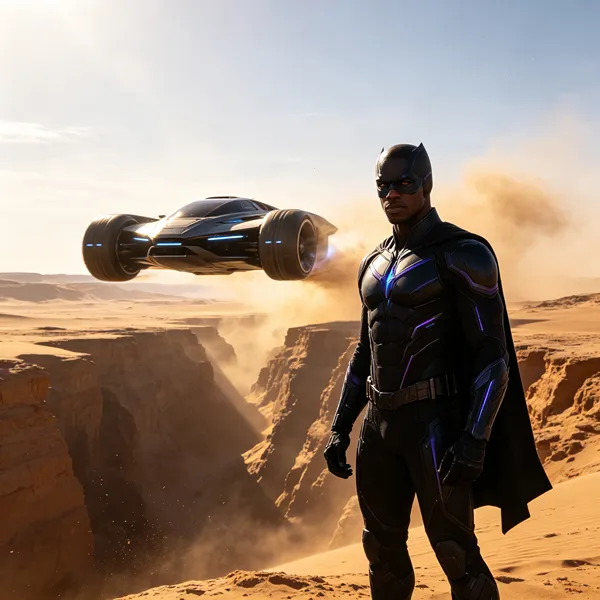
The main characters in Black Panther each pull the story in a different direction. T'Challa represents duty and tradition, Killmonger forces Wakanda to face its hidden past, and the supporting characters show the different choices Wakanda could make about loyalty, power, and responsibility.
T'Challa as Wakanda's king and Black Panther
T'Challa returns to Wakanda after his father T'Chaka's death and takes on two roles at once: king of Wakanda and the Black Panther. At first, he wants to protect the country by honoring its traditions, but the events of the film force him to question whether tradition alone is enough.
His arc is built around judgment, not just strength. He wins fights, but his real growth comes from listening to uncomfortable truths and changing his view of what a responsible ruler should do.
Killmonger as T'Challa's rival
Erik Killmonger is T'Challa's cousin and the film's central antagonist. He believes Wakanda betrayed people of African descent around the world by hiding its power instead of helping them fight oppression.
- His claim is personal: he was cut off from Wakanda after his father's death.
- His politics are radical: he wants Wakandan weapons used for violent uprising.
- His challenge is dangerous: he knows Wakandan law well enough to take the throne legally.
Shuri, Nakia, and Okoye as key allies
Shuri, Nakia, and Okoye are not interchangeable helpers. Shuri brings Wakanda's technology and humor, Nakia argues for helping people beyond the border, and Okoye stands for duty to the throne and the nation's institutions.
Their different loyalties matter when Killmonger takes power. Nakia resists immediately, Okoye struggles with her duty, and Shuri helps keep T'Challa's side alive. If you are looking at the film for its themes, these three characters are often more important than the action scenes around them.
Klaue and M'Baku as major supporting figures
Ulysses Klaue is a vibranium smuggler whose crimes show why Wakanda fears outsiders discovering its resources. M'Baku begins as a rival from the Jabari tribe, but later becomes an ally when T'Challa needs help most.
They serve opposite purposes in the story. Klaue proves that Wakanda's secrecy has a practical reason; M'Baku proves that internal disagreement does not have to mean betrayal.
What happens in Black Panther?
Black Panther begins as a royal succession story, turns into a hunt for a criminal, and becomes a battle over Wakanda's future. The plot is easiest to follow if you keep one question in mind: should Wakanda keep protecting itself by staying hidden, or should it use its power to help others?
T'Challa becomes king of Wakanda
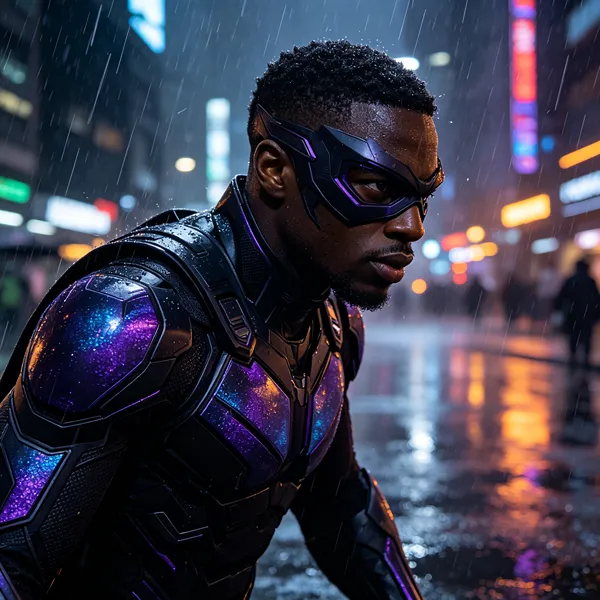
After T'Chaka's death, T'Challa returns home for his coronation. Wakanda appears poor to the outside world, but it is secretly an advanced nation built around vibranium, a rare resource that powers its technology and weapons.
Before becoming king, T'Challa must complete ritual combat. M'Baku challenges him, but T'Challa wins and earns the throne under Wakandan tradition. This opening is important because the same tradition later allows Killmonger to challenge him.
The hunt for Klaue reveals a larger threat
T'Challa, Nakia, and Okoye travel to South Korea to capture Klaue, who has stolen vibranium and Wakandan artifacts. What looks like a mission against an old enemy becomes more serious when Killmonger appears connected to Klaue.
The chase also brings CIA agent Everett Ross into the story. After Ross is injured, T'Challa brings him to Wakanda for treatment, which quietly breaks the country's usual rule of keeping outsiders away.
Killmonger arrives and claims the throne
Killmonger enters Wakanda with Klaue's body, proving he has done what Wakanda's leaders failed to do for years. He then reveals his identity as N'Jadaka, son of N'Jobu, making him T'Challa's cousin and a member of the royal bloodline.
Because of that bloodline, Killmonger can challenge T'Challa in ritual combat. He defeats T'Challa, takes the throne, and orders the heart-shaped herbs destroyed so no future Black Panther can oppose him. His plan is to send Wakandan weapons around the world and start violent uprisings against oppressive powers.
T'Challa survives and regroups with his allies
T'Challa survives the fall after his fight with Killmonger because the Jabari find him and keep him alive. Nakia, Shuri, Ramonda, and M'Baku help him recover, giving him one last chance to stop Killmonger's plan.
The final battle decides Wakanda's leadership
The final battle is both a fight for the throne and a fight over Wakanda's role in the world. T'Challa faces Killmonger, while Shuri, Nakia, Okoye, the Dora Milaje, and the Jabari try to stop loyalist forces and prevent Wakandan weapons from leaving the country.
- T'Challa reclaims his right to challenge because he did not submit or die in the earlier ritual fight.
- Okoye turns against Killmonger's rule once it becomes clear that loyalty to Wakanda matters more than obedience to a dangerous king.
- The weapons shipments are stopped before Killmonger's global plan can begin.
- T'Challa defeats Killmonger and takes back the throne.
How does Black Panther end?
Black Panther ends with T'Challa defeating Killmonger, but the emotional point of the ending is that T'Challa learns from him. Wakanda keeps its independence, yet its king decides that secrecy and inaction can no longer be treated as wisdom.
T'Challa defeats Killmonger
T'Challa and Killmonger fight in the vibranium mine beneath Wakanda. The mine's sonic stabilizers weaken their suits, making the duel feel less like a technology contest and more like a direct confrontation between two visions of Wakanda.
T'Challa wins and stops Killmonger's plan to spread vibranium weapons. The victory protects Wakanda from becoming the source of worldwide violence, but it also leaves T'Challa with the harder question of what Wakanda should do next.
Killmonger refuses to be imprisoned
After the fight, T'Challa offers Killmonger medical help. Killmonger refuses to live as a prisoner and chooses death instead, linking his choice to the history of enslaved people who chose death over bondage.
The scene does not excuse what Killmonger has done. It does make clear that his anger came from abandonment, historical pain, and Wakanda's refusal to face the world outside its borders.
T'Challa changes Wakanda's approach to the world
T'Challa opens an outreach center in Oakland, the place where Killmonger's story began, and later reveals Wakanda's true nature at the United Nations. He chooses cooperation rather than conquest.
If you are connecting the ending to the wider MCU, this decision matters because Wakanda is no longer just a hidden kingdom. It becomes a major global power that other heroes and nations can no longer ignore.
What are the main themes?
The main themes of Black Panther come from the tension between protection and responsibility. Wakanda's secrecy saved it from exploitation, but the film asks whether safety becomes selfish when a nation has the power to help others and chooses not to.
Leadership and responsibility
T'Challa inherits the throne, but the film does not treat inheritance as proof that he is ready. He has to decide whether being a good king means preserving what came before or correcting it when it causes harm.
Killmonger is the warning on the other side: anger at injustice can identify a real problem and still become destructive when it turns into domination.
Isolation versus engagement
Wakanda's isolation is understandable. Its leaders know that vibranium would attract invasion, theft, and political pressure if the world knew the truth.
The cost is moral. By staying hidden, Wakanda protects itself while people outside suffer without access to its knowledge, resources, or influence. T'Challa's final decision does not make openness look simple, but it does make isolation look incomplete.
Heritage and identity
T'Challa and Killmonger are both shaped by Wakandan heritage, but in opposite ways. T'Challa grows up inside the culture with duty and privilege; Killmonger grows up outside it with loss and exclusion.
Justice and inequality
Killmonger wants justice for people who have suffered, but he tries to achieve it through violence and empire-building. T'Challa rejects that path while accepting that doing nothing is also a choice with consequences.
The film's strongest idea is that justice cannot stop at defeating one dangerous person. Wakanda has to change the conditions that helped create the conflict in the first place.
Conclusion
Black Panther works because the throne battle has real emotional and political weight. T'Challa wins by stopping Killmonger, but he becomes a better king by understanding why Wakanda's old approach failed. The ending leaves Wakanda stronger not because it stays hidden, but because it finally accepts responsibility beyond its borders.
FAQS
Is Killmonger related to T'Challa?
Yes. Killmonger is T'Challa's cousin; his father N'Jobu was the brother of T'Challa's father, King T'Chaka.
Why does Wakanda reveal itself to the world?
T'Challa decides that hiding is no longer enough. Revealing Wakanda allows the country to share knowledge and influence without following Killmonger's violent approach.
How does Black Panther connect to the MCU?
The film follows T'Challa after his introduction in Captain America: Civil War. It also makes Wakanda important for later MCU events, especially Avengers: Infinity War.