What Is Robbie Williams' Story in Better Man?
Get a clear better man film synopsis covering Robbie Williams' rise, addiction, monkey symbolism, and ending.
Better Man follows Robbie Williams from a restless childhood in Stoke-on-Trent to Take That fame, solo success, addiction, rehab, and a more forgiving view of himself. If you want a better man film synopsis before watching, know that it is a spoiler-heavy musical biopic told through Robbie's own damaged self-image, with the unusual choice of showing him as a CGI monkey.
How Robbie Williams rises to fame in Better Man
The film treats Robbie's rise as exciting, but never simple. Fame gives him the attention he wants, then slowly proves unable to fix the insecurity that made him chase it so hard in the first place.
Growing up in Stoke-on-Trent
Robbie grows up in Stoke-on-Trent as a lively child who wants to be noticed. Performance is not just a hobby for him; it becomes a way to win affection, escape embarrassment, and feel bigger than his ordinary surroundings.
His mother and grandmother give him warmth, but his father's absence leaves a sore spot. That early need for approval is important because it explains why applause later feels almost addictive rather than merely enjoyable.
Joining Take That
Joining Take That gives Robbie his first real taste of national fame. He is young, funny, and hungry for attention, but he is also stepping into a tightly managed pop machine where image matters as much as personality.
- For Robbie: the band gives him status, structure, and a huge audience.
- For the story: Take That shows how quickly validation can become pressure.
- For viewers unfamiliar with him: this is where his need to stand out starts clashing with the group around him.
Leaving the band
Robbie's exit from Take That is shown as messy rather than heroic. He wants freedom, but he is also losing the structure, belonging, and public identity that came with being part of the group.
The split matters because it opens the door to his solo career while removing a safety net. That combination makes the next stage thrilling and dangerous at the same time.
Becoming a solo star
As a solo artist, Robbie becomes louder, bolder, and more exposed. The film uses this part of his career to show the rush of becoming the main attraction: bigger songs, bigger crowds, and a public persona that seems built for spectacle.
Struggling with sudden fame
Sudden fame turns Robbie's worst habits into bigger risks. Attention is constant, temptation is easy to reach, and every public win makes it harder for him to admit that he feels lost.
What brings Robbie to breaking point
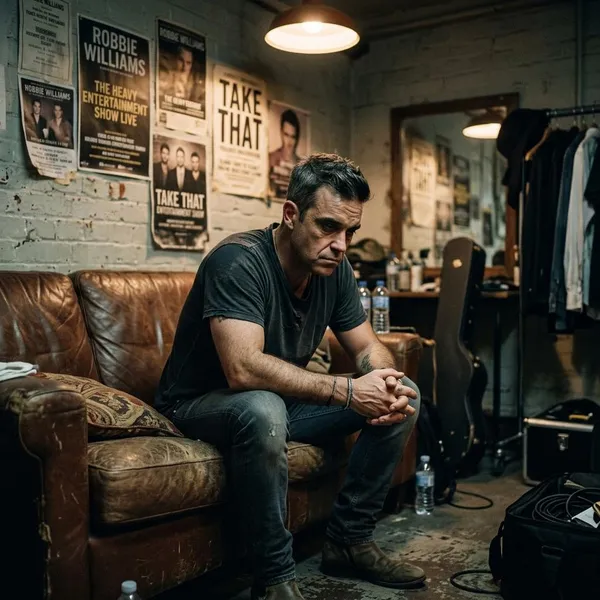
Robbie reaches breaking point because several pressures hit at once: addiction, self-loathing, romantic loss, family pain, and the impossible gap between public success and private collapse. The film does not suggest that one bad night ruins him; it shows a pattern building until he can no longer outrun it.
Addiction fuels his self-loathing
Addiction is shown as both an escape and a trap. Drugs and alcohol briefly numb Robbie's fear, shame, and pressure, but they also make his judgment worse and push him further from the people who care about him.
The film avoids making this look glamorous. The important point is not that fame gives him access to excess; it is that excess gives his self-hatred a place to grow.
His relationship with Nicole falls apart
Nicole Appleton gives Robbie a glimpse of intimacy that is not based on applause. Their relationship feels meaningful because she sees more than the stage persona, and for a while that seems like it could steady him.
It does not last. His addiction, instability, and inability to stay emotionally present damage the relationship until it breaks. If you are watching for the romance storyline, do not expect it to function as a rescue plot; the film uses it to show what he loses while he is still trapped in himself.
Family wounds deepen his insecurity
Robbie's father remains one of the emotional pressure points in the story. Even after success, Robbie still seems to be performing for the approval he missed as a child.
Knebworth forces him to face himself
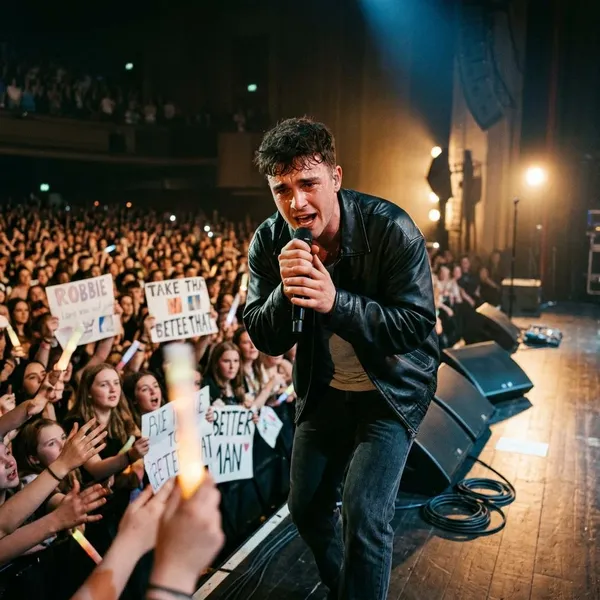
Knebworth works as the film's big contradiction: Robbie is at a career peak, yet emotionally close to collapse. The crowd is enormous, the achievement is undeniable, and still the moment does not feel purely triumphant.
- He gets what he wanted: mass attention, solo success, and proof that he can command a stage.
- He cannot enjoy it safely: addiction and shame keep distorting the victory.
- He has to choose: keep performing through the damage, or finally face what is happening to him.
Why Robbie Williams is shown as a monkey
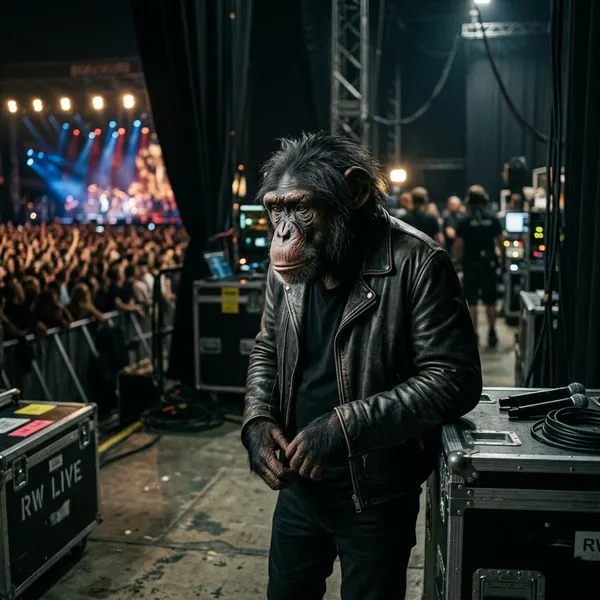
The monkey is the film's most obvious creative gamble, but it has a clear purpose. Robbie is not shown this way because the film wants a random gimmick; the image makes his shame, alienation, and "performing for others" feeling visible from the start.
This also helps different viewers read the film in different ways. If you are new to Robbie Williams, the monkey immediately tells you that this is not a standard celebrity timeline. If you already know the hits, it pushes you to focus less on impersonation and more on how Robbie experiences his own life.
It reflects how Robbie sees himself
The monkey form reflects Robbie's harsh view of himself. Even when other people admire him, he sees something flawed, embarrassing, or not fully acceptable.
That visual choice saves the film from overexplaining shame through dialogue. The audience can understand, almost instantly, that the story is being told through a damaged inner mirror.
It represents the performing-monkey feeling
The image also points to the way entertainment can reduce a person to what they can deliver. Robbie is expected to be funny, outrageous, charming, sexual, rebellious, and available whenever the spotlight demands it.
That "performing monkey" idea is especially sharp in the boy-band and tabloid sections. He is highly visible, but not always treated as fully human.
It shows fame through Robbie's perspective
Other characters do not react as if Robbie is literally a monkey, which makes the device feel subjective. The film is showing how he sees himself, not asking the audience to accept a strange literal reality.
That matters because Better Man is less interested in a neutral record of events than in the emotional memory of them. The monkey makes the biography feel personal, messy, and wounded instead of polished into a safe celebrity portrait.
How Better Man ends
Better Man ends with Robbie moving toward recovery rather than receiving a perfect happy ending. He enters rehab, begins repairing relationships, faces his past more honestly, and reaches a symbolic kind of self-acceptance.
Robbie enters rehab
Robbie entering rehab is the clearest turning point away from collapse. The film treats it as a beginning, not a quick fix: he finally has to stop hiding behind touring, chaos, and performance long enough to face the pain underneath.
Robbie repairs damaged relationships
Robbie begins to repair damaged relationships, especially around family. These scenes are careful because they do not pretend that apology or reconnection can wipe the past clean.
The change is smaller but more believable: he starts showing up with more honesty and less performance. That is what makes the recovery thread feel earned.
Robbie makes peace with his past
Making peace with the past does not mean Robbie decides everything was fine. It means he starts carrying his childhood hurt, addiction, and mistakes without letting them define every part of him.
This is where the film's emotional point becomes clearest. The story is not saying fame heals old pain; it is saying healing starts when he stops using fame to avoid it.
Robbie reunites with his father on stage
The reunion with his father on stage brings Robbie's private wound into the same place where he built his public identity. Since performance has always been tied to his need for approval, the stage becomes both painful and healing.
The moment is symbolic rather than tidy. It gives Robbie recognition from someone who mattered deeply to his sense of worth, but it does not suggest that one scene can repair an entire childhood.
His younger selves finally accept him
Robbie's younger selves finally accepting him is the film's clearest image of inner peace. The frightened, needy, ashamed versions of him are no longer treated as enemies to outrun.
That ending fits the movie's style because it visualizes recovery instead of only explaining it. Robbie does not become flawless; he becomes less divided against himself.
Conclusion
Better Man is most powerful when read as a story about self-worth, not just celebrity. The fame, Take That years, solo triumphs, Knebworth, rehab, and father-son reconciliation all point to the same practical truth: Robbie can be adored by a crowd and still need to learn how to live with himself.
FAQS
Does Robbie Williams play himself in Better Man?
Not in the usual live-action sense. Jonno Davies performs the CGI version of Robbie, while Robbie Williams is closely involved and his voice and perspective are central to the film.
What happens to Robbie and Nicole Appleton?
Their relationship falls apart. The film presents Nicole as an important emotional connection, but Robbie's addiction, instability, and career pressure make the relationship unsustainable.
What does the title Better Man mean?
The title points to Robbie's attempt to become healthier and more honest, not simply more successful. In the film, being a better man means facing shame instead of performing over it.