What Happens in Atonement?
Explore an atonement film synopsis that explains Briony's false accusation, class tension, and the tragic final twist.
An atonement film synopsis needs one warning up front: the whole story depends on spoilers, especially the ending. Atonement begins with Briony Tallis wrongly accusing Robbie Turner of a crime, then follows how that mistake destroys Robbie and Cecilia's chance at a life together. If you are checking the plot after watching, the key is not only what Briony says, but why everyone is so ready to believe her.
Atonement plot summary
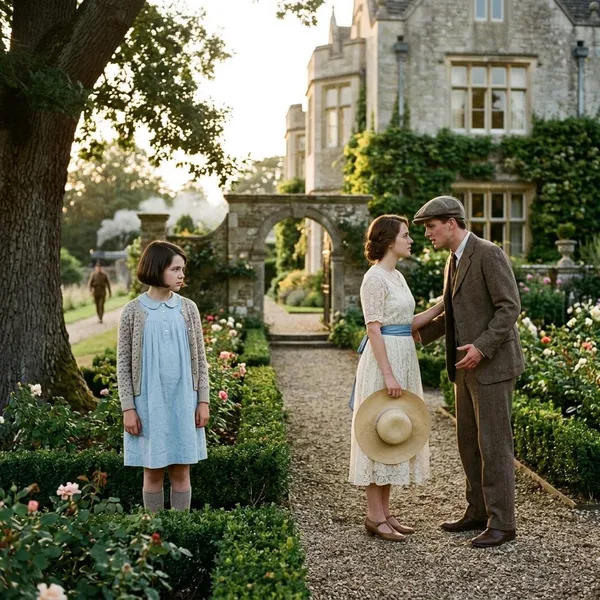
Atonement starts in 1935 at the Tallis family estate, where a hot afternoon of awkward encounters turns into a lifelong tragedy. The story is easiest to follow if you separate what Briony actually sees from what she thinks those scenes mean.
Briony misreads Cecilia and Robbie's relationship
Briony is thirteen, observant, and used to turning life into stories. When she watches Cecilia and Robbie at the fountain, she sees tension, embarrassment, and Cecilia undressing to retrieve a broken vase from the water. From a distance, it looks like Robbie has forced or humiliated Cecilia, even though the moment is really charged by attraction and frustration.
That first mistake matters because it gives Briony a role to play. Cecilia becomes someone to protect, and Robbie becomes the threatening figure in a story Briony has only half understood.
Briony reads Robbie's private letter
Robbie writes Cecilia an explicit note, then means to send a cleaner version. Briony accidentally receives the wrong letter and reads it before giving it to Cecilia.
For an adult viewer, the letter is embarrassing and reckless. For Briony, it feels like evidence. She does not have the maturity to separate private sexual desire from danger, so the letter hardens her suspicion instead of making her question what she has seen.
Briony witnesses Cecilia and Robbie in the library
When Briony enters the library, Cecilia and Robbie are together in an intimate, consensual moment. Briony sees only a fragment: physical intensity, secrecy, and Cecilia in a situation she cannot interpret.
Lola is attacked at the Tallis estate
Later that night, Lola is attacked outside on the estate grounds. The setting is dark and confused, and Briony does not have a clear enough view to make a reliable identification.
Instead of admitting uncertainty, she connects the assault to the story already forming in her mind. This is the point where a private misunderstanding becomes a public accusation with legal consequences.
Briony falsely identifies Robbie
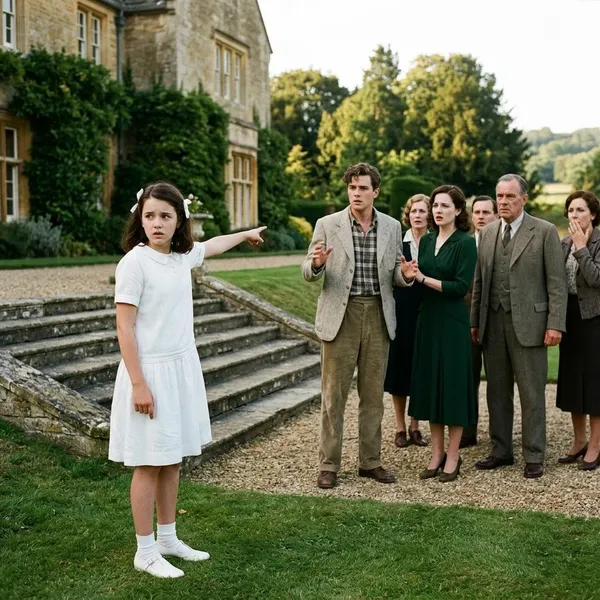
Briony tells the adults and police that Robbie attacked Lola. She speaks as if she knows, not as if she is guessing, and that confidence gives her statement enormous power.
Robbie is arrested and sent to prison
Robbie is arrested just after he and Cecilia have admitted their love. The timing makes the damage especially cruel: their relationship begins honestly, then is immediately broken apart by Briony's testimony.
The film does not spend much time on the legal process, but the result is clear. Robbie loses his freedom, his future as a doctor, and his place in Cecilia's life. His closeness to the Tallis family does not protect him; his class position makes him easier to sacrifice.
Robbie joins the army during the war
After prison, Robbie is released on the condition that he serves in the army. During World War II, he is sent to France and becomes part of the retreat toward Dunkirk.
These scenes shift the film from country-house drama to wartime ruin. Robbie moves through exhaustion, injury, dead soldiers, and collapsing order, holding onto Cecilia's letters as the one proof that his old life is not completely gone.
Cecilia leaves her family and becomes a nurse
Cecilia refuses to accept the family's version of events. She cuts herself off from the Tallises and trains as a nurse in London, choosing Robbie and the truth over family loyalty.
Her nursing work also changes how we see her. She is not simply waiting romantically for Robbie; she is living with discipline, loss, and moral clarity. If Robbie's wartime scenes show endurance, Cecilia's show commitment.
Briony realizes the damage she caused
As Briony grows older, she begins to understand that she destroyed two lives by treating her interpretation as fact. Nursing during the war exposes her to real suffering, which strips away the childish drama she once imposed on the world.
She also comes to know that Robbie was not Lola's attacker. Her guilt is not just about having been wrong; it is about having been wrong loudly enough for adults, police, and class prejudice to turn her mistake into Robbie's fate.
Why does Briony accuse Robbie?
Briony accuses Robbie because she combines partial evidence, fear, imagination, and social bias into a story that feels certain to her. She is not making a careful claim based on what she truly knows. She is trying to make confusing adult events fit a simple pattern.
She misunderstands what she sees
Briony repeatedly sees scenes from the wrong angle. The fountain looks coercive, the letter looks predatory, the library looks violent, and the scene after Lola's attack looks clearer than it is.
Her mistake is tragic because the film lets the audience know more than she knows. Viewers can see the gap between reality and interpretation, while Briony keeps closing that gap in the wrong direction.
She believes Robbie is dangerous
After the letter and the library scene, Briony no longer sees Robbie as merely confusing or inappropriate. She sees him as a threat. Once she has decided that, the attack on Lola becomes the final piece of a pattern she already wants to complete.
This is why her accusation feels believable even though it is false. People often use new uncertainty to support an old fear, and Briony does exactly that.
She mistakes certainty for truth
The most dangerous thing Briony brings to the accusation is not evidence, but confidence. She says Robbie did it with enough certainty that the adults around her treat the claim as reliable.
- She does not say enough: "I think I saw him."
- She says too much: "I saw him."
- The cost: doubt disappears before the truth has a chance.
Class prejudice reinforces her suspicion
Robbie is educated and loved by Cecilia, but he is still the housekeeper's son in the Tallis household. That difference matters when the accusation lands.
If the same claim had been made against someone fully protected by the family's class status, it might have been tested more carefully. Robbie is close enough to be known, but not secure enough to be defended. Briony's error becomes devastating because the social world around her is prepared to believe it.
Atonement ending
The ending reveals that the apparent reunion between Robbie and Cecilia is not real. Older Briony, now a writer, admits that she created that scene in her novel because the real ending was far harsher: Robbie died before returning from Dunkirk, and Cecilia died during the Blitz.
Briony appears to visit Robbie and Cecilia
Near the end, young adult Briony seems to visit Cecilia and Robbie in London. She tells them she wants to correct her testimony and acknowledge what she did.
The scene feels tense rather than forgiving. Cecilia is cold, Robbie is angry and worn down, and Briony's remorse does not magically undo anything. At first, it looks like the film is offering a painful but real chance at accountability.
Briony later reveals the reunion was fictional
Older Briony later explains that the London meeting never happened. She wrote it into the story because Robbie and Cecilia were already dead before such a confrontation could take place.
That reveal changes the emotional contract of the film. The audience has been allowed to believe in a small repair, only to learn that even that repair belongs to fiction. Briony can confess, but she cannot give the couple the truth in time.
Robbie dies before leaving Dunkirk
Robbie dies of septicemia at Bray Dunes before he can leave Dunkirk and return to Cecilia. His long struggle through France is therefore not a journey back to love, but the last stretch of a life already damaged by Briony's accusation.
Cecilia dies during the Blitz
Cecilia dies in the Balham Underground station bombing during the Blitz. She never reunites with Robbie, and she never gets the life she chose when she broke from her family.
Her death also keeps the tragedy from being only private. War destroys lives on a massive scale, but Cecilia's loss still feels personal because the audience knows how much had already been taken from her before the bombing.
Briony gives them a life together in her novel
Briony's final version gives Robbie and Cecilia the peaceful ending reality denied them. In fiction, they survive, reunite, and live together by the sea.
That act is her atonement, but the film is careful not to make it feel clean. A beautiful ending can preserve love in memory, yet it cannot restore years stolen from real people. Briony's power as a writer is also a reminder of her powerlessness as a person who confessed too late.

Conclusion
Atonement is devastating because the central mistake is both small and enormous: a young girl sees fragments, decides she understands them, and lets certainty replace truth. Robbie and Cecilia are not simply separated by war or bad luck; they are robbed of time by a false story that others were willing to believe. Briony's novel gives them tenderness at the end, but the film leaves the sharper judgment in place: imagined mercy is not the same as repair.
FAQS
Do Robbie and Cecilia end up together?
No. Their reunion is part of Briony's fictional version. In the real sequence of events, Robbie dies near Dunkirk and Cecilia dies in London during the Blitz.
Why does Briony write the final version of their story?
Briony writes it because she cannot repair the truth in life. Giving Robbie and Cecilia a shared future in fiction is her attempt to honor them, even though she knows it cannot make her innocent.
Is Atonement based on a book?
Yes. The film is based on Ian McEwan's 2001 novel Atonement, and the adaptation keeps the major structure of the false accusation, wartime separation, and final authorship reveal.