What Happens in the Alice in Wonderland Movies?
Get a clear alice in wonderland film synopsis for the 1951 and 2010 movies, including plot, characters, endings, and key differences. Read more.
If you searched for an alice in wonderland film synopsis, the main thing to know is that Disney's 1951 film and Tim Burton's 2010 film are not the same story told twice. The 1951 version is a dreamlike trip through Wonderland, while the 2010 version turns Alice's return into a darker fantasy quest with a battle, a prophecy, and a more grown-up choice waiting at the end.
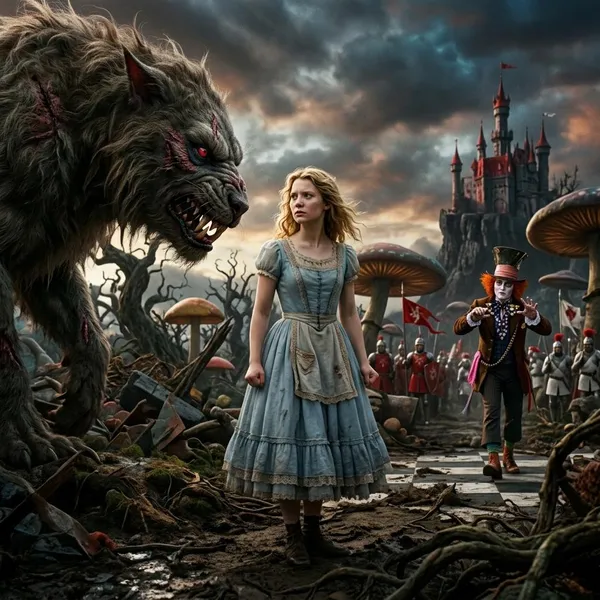
Alice in Wonderland 2010 plot summary
The 2010 movie follows Alice Kingsleigh as a young woman who is being pushed toward a marriage she does not want. When she follows the White Rabbit, she returns to the strange world she once visited as a child, although she remembers it only in fragments.
This version is best read as a return story rather than a simple remake. Alice is not just wandering through odd scenes; she is being asked to decide whether she will accept a role that everyone else seems to believe belongs to her.
Alice returns to Underland
At a garden party in England, Alice feels trapped by expectations, especially the pressure to accept Hamish's proposal. She notices the White Rabbit, follows him, and falls into Underland, where she goes through the familiar shrinking and growing scenes with a bottle and cake.
The important difference is that Underland is not treated as random nonsense. The creatures there have been waiting for "the right Alice," and her arrival immediately raises a question: is she only dreaming, or has she returned to a place that needs her?
Alice reunites with familiar characters
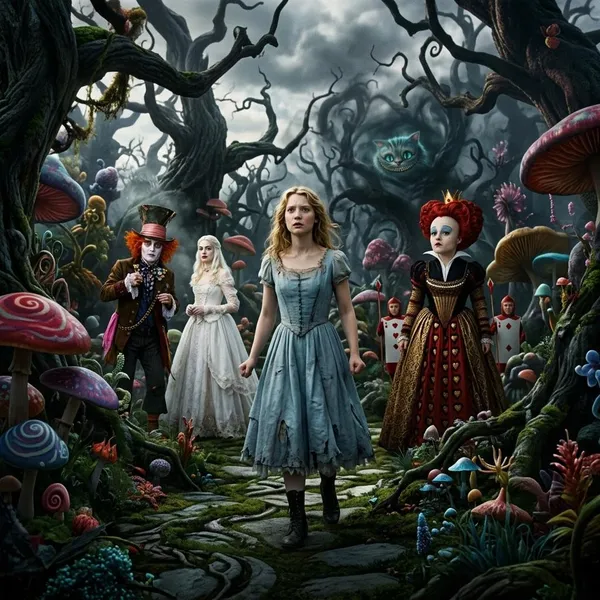
Alice meets characters who feel familiar from her childhood visit, including Absolem the Caterpillar, the Cheshire Cat, the March Hare, and the Mad Hatter. Some doubt her, some guide her, and the Hatter in particular believes she can help change Underland's future.
For someone watching the 2010 film after the 1951 animation, this is where the movie feels most like a sequel-style reimagining. The characters are recognizable, but their purpose is different: they push Alice toward memory, confidence, and action.
The Red Queen threatens Underland
Underland is ruled by the Red Queen, who uses fear, punishment, and the Jabberwocky to stay in power. Her court is tense and false, with characters flattering her because crossing her can be dangerous.
That gives the 2010 film a clearer villain than the animated version. Alice is no longer only trying to escape a confusing place; she is stepping into a land where the ruler's cruelty affects everyone around her.
Alice accepts her role in the prophecy
Alice learns that a prophecy says she will slay the Jabberwocky on Frabjous Day with the Vorpal Sword. She resists the idea at first because she does not feel brave, certain, or even fully convinced that Underland is real.
- At first: she treats everything like a dream, which lets her avoid responsibility.
- Then: she begins to remember Underland and sees that her choices matter there.
- Finally: she chooses the role for herself instead of simply obeying what others expect.
That last point matters. The prophecy is not just a plot device; it mirrors the pressure she faces in England, where other people also want to decide who she should become.
Alice battles the Jabberwocky
On Frabjous Day, Alice wears armor and faces the Jabberwocky in the final battle. With the Vorpal Sword, she defeats the creature by cutting off its head, which breaks the Red Queen's hold over Underland.
The scene is the movie's clearest turning point. Alice is still frightened, but she acts anyway, and that makes the victory feel like a decision rather than a simple fantasy reward.
Alice returns to England
After the White Queen is restored and the Red Queen is banished, Alice chooses to leave Underland. She returns to the garden party, refuses Hamish's proposal, and begins shaping a future that fits her own ambitions instead of other people's plans.
If you are watching for the ending, this is the practical takeaway: Underland changes how Alice behaves in real life. The adventure gives her the courage to reject a safe but unwanted path.
Alice in Wonderland 1951 plot summary
Disney's 1951 animated film is much looser and more playful. It follows Alice as she falls into Wonderland and moves from one strange encounter to another, with dream logic holding the story together more than a traditional plot.
If you want the version with the most famous songs, characters, and surreal images, this is usually the better starting point. It is less about defeating a villain and more about how overwhelming Wonderland feels to a curious child.
Alice follows the White Rabbit
Alice begins the film bored beside her sister, drifting away from a dull lesson into her own imagination. When she sees the White Rabbit rushing by and worrying about being late, she follows him and falls down the rabbit hole.
Inside Wonderland, she finds locked doors, a tiny key, and the "Drink Me" and "Eat Me" items that make her shrink and grow. The opening quickly teaches the viewer the rule of this world: ordinary logic will not help much here.
Alice explores Wonderland
Once Alice enters Wonderland, the story becomes a chain of strange episodes. She meets talking flowers, odd creatures, and the Caterpillar, whose question "Who are you?" leaves her more confused than reassured.
This is why the 1951 film can feel perfect for a viewer who wants atmosphere rather than a tight adventure plot. It is colorful, musical, and unpredictable, but it does not pause to explain every turn.
Alice meets the Mad Hatter and March Hare
The Mad Tea Party is one of the film's most recognizable scenes. Alice meets the Mad Hatter and the March Hare at an endless tea time where conversation goes in circles, manners collapse, and riddles do not need sensible answers.
For Alice, the scene is funny at first and exhausting after a while. For viewers, it captures the film's main appeal: familiar social rules are twisted until they become silly, irritating, and strangely memorable.
Alice encounters the Cheshire Cat
The Cheshire Cat appears and disappears whenever he likes, often leaving only his grin behind. He gives Alice directions, but never in a way that feels fully safe or straightforward.
He is not exactly a villain, and he is not a dependable helper either. His main role is to make Wonderland feel impossible to pin down, which is why he works so well in the dreamlike 1951 version.
Alice faces the Queen of Hearts
The Queen of Hearts brings the film's biggest threat, though she is still comic in a loud, exaggerated way. She shouts "Off with their heads!" whenever she is angry and turns even a croquet game into a dangerous mess.
Her power feels unfair because the rules keep changing. That is the nightmare edge of the animated film: Alice is stuck in a place where adults in authority can be ridiculous and frightening at the same time.
Alice escapes Wonderland and wakes up
During the trial scene, Wonderland turns openly hostile and Alice is chased by the Queen's cards and other creatures. The adventure stops feeling merely odd and becomes something she wants to escape.
She wakes beside her sister, back in the calm real world. The film does not overexplain the dream, which is part of its charm; Wonderland may not be real in the ordinary sense, but Alice's confusion, fear, and wonder felt real while she was there.
How the 1951 and 2010 Alice in Wonderland films differ
The simplest way to choose between them is to decide what kind of Alice story you want. Pick the 1951 film if you want the classic dreamlike version; pick the 2010 film if you want a darker fantasy adventure with a clearer beginning, conflict, and ending.
For a first family watch or a quick introduction to the characters, the 1951 animation usually makes more sense. For someone who already knows the basic imagery and wants a more dramatic coming-of-age version, the 2010 movie is easier to follow as a modern fantasy plot.
Different versions of Alice
The 1951 Alice is a child led by curiosity. She reacts to Wonderland, gets frustrated by it, and eventually wants to go home.
The 2010 Alice is older and already facing pressure in the real world. Underland becomes a test of whether she can trust herself enough to refuse the life others have arranged for her.
Different storylines
The animated film works like a dream: one strange scene leads to another, often because of mood rather than clear cause and effect. That makes it feel whimsical, but also less focused.
The 2010 film has a more familiar fantasy structure: Alice returns, learns about a prophecy, gathers courage, faces a monster, and comes back changed. If you prefer a story with a goal and a payoff, that version will likely feel more satisfying.
Different villains and conflicts
In 1951, the Queen of Hearts is dangerous because she is impulsive and unreasonable. Her anger creates chaos, but the conflict still fits the film's comic dream tone.
In 2010, the Red Queen is treated more like a ruler whose power damages an entire realm. The Jabberwocky, the court, and the threat to Underland make the conflict larger and more serious.
Different endings
The 1951 movie ends with Alice waking up, so the story closes like a strange dream that has finally released her. The 2010 movie sends Alice back to England with a changed sense of herself.
That is the cleanest ending difference: the 1951 film restores normal life, while the 2010 film uses the fantasy adventure to change Alice's real-world choices.
Conclusion
The 1951 and 2010 Alice in Wonderland films share characters and images, but they suit different moods. Watch the 1951 animation first if you want the classic Wonderland experience; choose the 2010 film when you want a darker return story where Alice's adventure leads to a clearer personal decision.
FAQS
What is the main storyline of Alice in Wonderland?
At its core, Alice follows the White Rabbit into a strange world where normal rules stop working. The 1951 film treats that as a dream journey, while the 2010 film turns it into a quest to free Underland from the Red Queen.
What is the difference between Wonderland and Underland?
Wonderland is the familiar name used for the classic setting, especially in the 1951 film. Underland is the name used in the 2010 movie, where Alice is told she misheard the name as a child.
Which Alice in Wonderland movie should you watch first?
Start with the 1951 animated film if you want the most iconic version of the characters and tone. Watch the 2010 film first only if you prefer modern fantasy stories with action, darker visuals, and a stronger hero arc.