What Happens in Alien Earth and How Does It End?
Read an alien earth episode summary with episode-by-episode recaps, Xenomorph escalation, and a clear ending explainer.
If you want an alien earth episode summary without rewatching every chapter, the first season is easiest to read as one long power shift: the Maginot crash brings the alien specimens to Earth, Prodigy tries to control them, and Wendy turns from protected experiment into the person who breaks the system open. Spoilers follow for all eight episodes and the Season 1 ending.
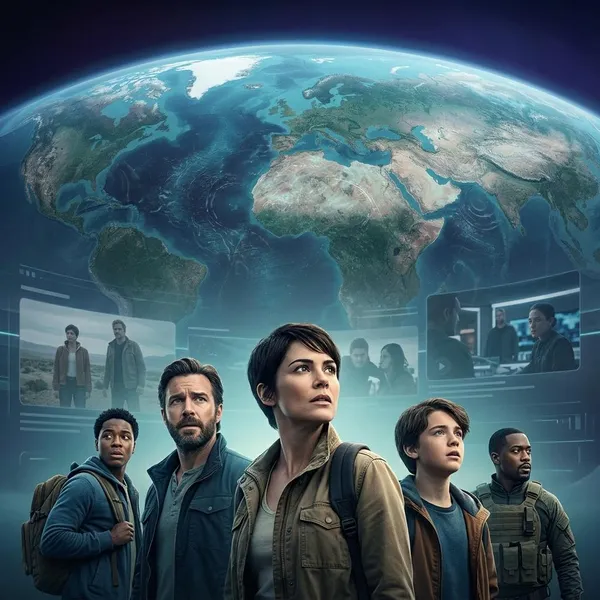
Alien Earth Season 1 episode summaries
Season 1 moves in clear stages. The early episodes set up the crash, Wendy's search for Joe, and the corporate scramble around the alien cargo. The middle episodes show Prodigy making the worst possible choice: treating the creatures as research material instead of an emergency to contain.
Episode 1 the Maginot crashes
The premiere begins with the Weyland-Yutani research ship Maginot crashing on Earth. That crash matters because it brings dangerous alien specimens out of a controlled space environment and into a world full of people, infrastructure, and companies eager to claim whatever survived.
Episode 2 Wendy finds Joe
Wendy reaches Joe, but the reunion is not a clean comfort scene. Both of them have been shaped by separation and control, so the emotional relief comes with distrust, confusion, and the sense that their family bond has been damaged by forces much bigger than either of them.
At the same time, the corporate fight becomes clearer. Boy Kavalier's vision of the future may look polished from the outside, but his interest in hybrids and alien biology shows how quickly "innovation" turns into ownership when no one can stop him.
Episode 3 the alien experiments begin
By Episode 3, the alien threat is no longer just cargo from a crashed ship. Prodigy begins studying the specimens, and that choice turns a crisis into a man-made escalation. The practical mistake is simple: every test creates another point of contact, another chance for error, and another delay before anyone admits the creatures should not be handled like normal research material.
Episode 4 Wendy connects with a Xenomorph
Episode 4 changes Wendy's role. She does not simply run from the Xenomorph; she appears able to sense or communicate with it in a way ordinary humans cannot. The show keeps this connection unsettling, which is important. Wendy is not suddenly safe, and the creature is not softened into a pet.
Episode 5 the Maginot disaster is revealed
Episode 5 fills in the disaster behind the disaster. The Maginot crash is not framed as a freak accident that no one could have imagined. It is tied to choices, secrecy, and the decision to move or preserve alien material despite the danger.
The episode is useful because it explains why the season's horror feels preventable. If you are trying to understand who is most responsible, this is the chapter that points away from bad luck and toward corporate recklessness.
Episode 6 Neverland falls into chaos
Neverland starts breaking down in Episode 6. The facility no longer feels like a controlled sanctuary; it feels like a closed system full of frightened people, failed protocols, and leaders who cannot agree on what matters most.
For Wendy, the collapse confirms something she has been learning all season: Prodigy's version of safety depends on obedience, not care. Once the adults lose control, her goal begins shifting from survival to resistance.
Episode 7 the hybrids try to escape
The hybrids move from fear into action. Their escape attempt is not only about getting out of danger; it is about refusing to remain experiments inside a system that has already proven it cannot protect them.
Episode 8 Wendy takes control
The finale pays off Wendy's transformation. She steps into command while Boy Kavalier's authority collapses, and the Lost Boys stop acting like children waiting for permission. Neverland's old order breaks in public, not quietly in the background.
The ending is not a clean victory. Wendy has power, but power in a collapsing facility with alien threats still loose is dangerous. If you are watching mainly to know whether Season 1 resolves the story, the answer is partly: the control struggle is resolved for now, but the world it creates is still unstable.
How the alien threat grows across Season 1
The alien danger grows because people keep making the wrong priority call. Instead of treating the specimens as an immediate containment problem, the powerful groups around them treat the crash as an opportunity. That is the season's most important cause-and-effect chain.
A casual viewer may focus on the Xenomorph attacks, but the sharper reading is that the aliens expose existing failures. The creatures are deadly, yet the spread becomes worse because humans delay, compete, experiment, and lie.
The crash brings the specimens to Earth
The Maginot crash is the point of no return. A threat that might have stayed isolated in space is now on Earth, where there are more people to endanger and more institutions trying to claim control. That wider setting makes every delay more costly.
Prodigy turns the creatures into experiments
Prodigy makes the situation worse by treating alien life as a resource. The company's mistake is not just arrogance; it is a bad risk calculation. A creature that cannot be reliably predicted should not be handled as though better equipment or smarter executives will make it safe.
- Short-term thinking: preserve the specimens and learn from them.
- Real outcome: more contact, more exposure, and more ways for containment to fail.
- Season theme: the same mindset that uses hybrids also tries to use the aliens.
Containment failures spread the danger
The danger spreads in layers: first the crash, then the decision to keep studying the specimens, then failures inside Neverland, and finally panic once people realize the system cannot protect them. No single failure explains everything. The point is that each bad choice makes the next one harder to stop.
Wendy changes the balance of power
Wendy changes the alien threat because she does not relate to it like the adults do. They see either a monster or an asset. She senses something stranger: a connection that may allow understanding, influence, or at least a different kind of response.
That does not make Wendy harmless or automatically right. It makes her the one person who can disrupt the old categories. In a low-risk scene, that connection feels like discovery; in a high-risk containment failure, it becomes the difference between following failed adult orders and making a new choice fast.
Wendy's story across Alien Earth
Wendy's arc is the reason the season does not play like a simple outbreak story. She begins with a personal goal, finding Joe, but every episode pushes her toward a larger question: who gets to decide what hybrids are for?
Her story has two practical tracks. Emotionally, she is trying to hold onto family and identity. Politically, she is learning that Prodigy's control is not a temporary protection measure; it is the structure she has to break.
Wendy reunites with Joe
Joe gives Wendy a reason to keep pushing through the chaos. Their reunion matters because it keeps her grounded in something personal while the show expands into corporate politics and alien horror.
Still, the relationship is not simple repair. If you are watching their scenes for emotional closure, the tension is part of the point. The season shows how badly institutions can distort even the most basic family bond.
Wendy discovers her alien connection
Wendy's connection to the Xenomorph turns her from a person caught in the plot into one of the plot's biggest mysteries. She appears able to sense or communicate across a boundary that no one else understands.
The important nuance is that the show does not explain this as a neat superpower. It feels instinctive and risky, which keeps the horror alive while giving Wendy real leverage.
Wendy questions Prodigy's control
Wendy's doubt grows because Prodigy keeps proving that its idea of protection is really control. The adults monitor, classify, and direct the hybrids, but when the crisis arrives, their authority does not produce safety.
- First stage: Wendy wants answers and Joe.
- Middle stage: she sees the experiments and secrecy clearly.
- Final stage: she stops asking the system to treat hybrids better and starts rejecting the system itself.
Wendy leads the hybrid uprising
Wendy becomes the hybrids' leader because she has credibility the adults lack. She has lived under the same control, she understands the fear inside the group, and she can act when the official chain of command becomes useless.
Alien Earth ending explained
The Season 1 ending means the old rulers of Neverland lose control and Wendy's hybrids take charge, but the alien crisis remains unresolved. That is why the finale feels satisfying and unfinished at the same time.
Wendy frees the Lost Boys
Wendy freeing the Lost Boys is the finale's clearest break from Prodigy's authority. The hybrids stop being protected prisoners and become a community capable of acting for itself.
Boy Kavalier loses control of Neverland
Boy Kavalier loses control because his whole system depends on the belief that living things can be managed if the technology, money, and planning are impressive enough. The finale proves the opposite. Hybrids rebel, alien biology refuses to stay contained, and the facility stops obeying his design.
His defeat is not just a plot reversal. It is the season's judgment on ownership disguised as vision.
The adults become the prisoners
The adults becoming prisoners is the finale's strongest visual reversal. The people who built the rules, cages, and command structure end up trapped inside the world they created.
That reversal matters because it is not played as a simple joke on the adults. It shows how quickly authority can collapse when it was built on fear rather than trust. Once the hybrids no longer accept the old order, the adults have very little moral or practical power left.
Wendy declares the hybrids in charge
Wendy's declaration that the hybrids are in charge is the real ending beat. It does not mean the danger is over. It means the question has changed from "Can the adults contain this?" to "What will the hybrids do with power now that the adults have failed?"
- Resolved: Wendy breaks Prodigy's control over the hybrids.
- Unresolved: the alien threat still hangs over Earth and Neverland.
- Set up: Season 2 can explore whether Wendy's new order becomes liberation, survival rule, or something darker.
Conclusion
Season 1 works best when you track the shift in control: the Maginot brings the threat to Earth, Prodigy makes it worse by trying to study and own it, and Wendy turns the collapse into a hybrid uprising. The finale does not close the alien danger; it closes the adults' claim that they deserve to be in charge, which leaves the next chapter open in a much more dangerous way.
FAQS
How many episodes are in Alien Earth Season 1?
Alien: Earth Season 1 has eight episodes. The season starts with the Maginot crash and ends with Wendy taking control of Neverland's broken power structure.
What happens to Boy Kavalier at the end?
Boy Kavalier loses control of Neverland. His authority collapses when the hybrids reject his system and the alien crisis proves too unstable for his plans.
Does Alien Earth end on a cliffhanger?
Yes. The finale gives Wendy and the hybrids a major victory, but it leaves the alien threat, the future of Neverland, and the consequences of hybrid rule unresolved.