What Happens in A Remarkable Place to Die Season 1?
Get a remarkable place to die episodes summary spoiler with a full Season 1 recap, key twists, and ending explained.
Season 1 is a four-part mystery where the weekly murders are not just side cases: they keep pushing Anaïs Mallory back toward Lynne's death, her father's past, Luke's betrayal, and the corruption hidden under Queenstown's polished surface. If you want the spoiler version, the important thing to know is that the finale ties the murders together through Snape's ledger, a money trail, and a family truth Anaïs was not ready to face.
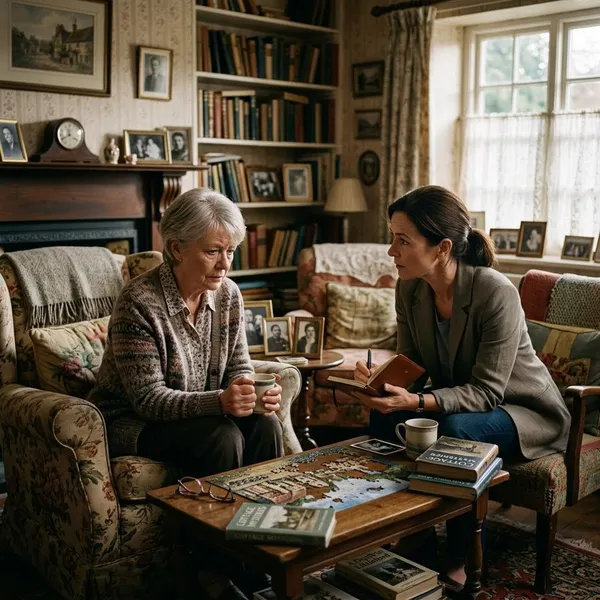
A Remarkable Place to Die Season 1 spoiler summary
The season works best when viewed as one connected case told through four separate investigations. Each episode gives Anaïs a new murder to solve, but the clues keep bending back toward the same buried story: Lynne's death was never just a private family tragedy, and Queenstown's secrets have been protected by money, silence, and people Anaïs once trusted.
- Episode 1: a cliffside crash turns into a staged murder scene.
- Episode 2: a body in an abandoned gold mine points toward older local secrets.
- Episode 3: a double homicide at a remote campsite brings Anaïs's past closer to the case.
- Episode 4: Snape's ledger exposes the money trail and leads to the final family revelations.
Anaïs returns to Queenstown after her sister's death
Anaïs comes back to Queenstown as a homicide detective, but she is not emotionally neutral. Lynne's death still sits at the center of her life, and returning home puts her near the people and places she has spent years trying to keep at a distance.
The personal setup is messy in a useful way. Her mother is a source of tension, Luke is her former fiancé, and Maja was once her best friend but is now connected to Luke. That triangle matters because the season keeps asking the same uncomfortable question: can Anaïs investigate clearly when nearly every lead touches someone she knows?
Each murder draws her closer to her family's past
The cases start as separate crime scenes, but none of them stays separate for long. The staged crash, the mine body, the campsite deaths, and the finale's financial evidence each expose another piece of the same hidden history.
Anaïs also becomes more personally driven as the season goes on. She does not simply notice links to Lynne's death; she begins actively chasing them, sometimes in ways that put her judgment under pressure. That is where the show becomes more than a standard procedural.
The cases expose a deeper local conspiracy
By the middle of the season, the pattern is hard to ignore: the murders are connected to a broader system of drugs, concealed money, favors, and protection. The important shift is from "who killed this person?" to "who has been keeping this whole arrangement alive?"
- Money matters more than rumor: financial records give the conspiracy a shape.
- Silence becomes suspicious: several people seem to know more than they admit.
- Queenstown's beauty is misleading: the landscape looks clean, but the local power structure is not.
The finale reveals the truth behind the family deaths
The final episode connects the present murders directly to Anaïs's family history. She learns that Lynne and her father were caught in a more dangerous world than she understood, and the answer gives her clarity without giving her comfort.
Episode 1 summary and spoilers
Episode 1 sets the pattern for the whole season: a dramatic crime scene looks obvious, forensic evidence breaks that first story apart, and Anaïs's family grief starts pressing into the case. The premiere is not only introducing a murder; it is teaching viewers not to trust the neat version of events.
A cliffside car crash becomes a murder case
The episode begins with a car over a cliff, the kind of death that could easily be accepted as an accident in Queenstown's steep, dangerous landscape. That makes the staging believable at first glance, which is why the scene works as an opening hook.
Once Anaïs starts questioning the details, the case changes direction. The investigation is no longer about how the driver lost control; it becomes about where the victim actually died, who moved the body, and why someone needed the crash to look accidental.
The autopsy overturns the accident theory
The autopsy is the episode's cleanest twist: the victim had already been dead for three days before the car went over the cliff. One forensic detail destroys the entire accident theory and turns the crash into evidence of staging.
This also establishes Anaïs's value as a detective. She is willing to push past the most convenient explanation, which becomes crucial later when she applies the same suspicion to the official story surrounding Lynne.
The case brings Lynne's death back into focus
Episode 1 uses the current murder to reopen Anaïs's private wound. Lynne's death is not treated as background decoration; it becomes the emotional thread that will keep pulling Anaïs deeper into Queenstown's buried history.
Episode 2 summary and spoilers
Episode 2 moves the season into darker, more local territory. The abandoned gold mine gives the murder a stronger sense of place, while Anaïs's private investigation into Lynne becomes harder to separate from her official work.
A body is found in an abandoned gold mine
The body in the old mine is one of the season's more memorable images because the setting already suggests concealment. A mine is a place built around digging, extraction, and darkness, so using it as a hiding place fits the show's larger obsession with buried truth.
The location also keeps the case from feeling generic. This is not a random warehouse or alleyway murder; it is tied to Queenstown's history and isolation, which makes the town itself feel implicated.
Anaïs secretly investigates Lynne's death
Anaïs's search for answers becomes more active here. She is no longer just reacting when Lynne comes up; she is following private leads and testing old assumptions while still working a current murder case.
- Her strength: she notices connections others might avoid.
- Her risk: grief can make her push too hard or too privately.
- The viewer's warning sign: when Anaïs hides part of what she is doing, the personal mystery is taking over.
New evidence points to deeper local secrets
By the end of Episode 2, the season is no longer asking viewers to believe in coincidence. The mine case, Lynne's unresolved death, and the hints of local corruption begin to feel like parts of one protected system.

Episode 3 summary and spoilers
Episode 3 is the point where the personal and procedural stories fully collide. The remote campsite case begins as a disturbing double homicide, but its real function is to pull Anaïs's family history much closer to the surface before the finale.
Two bodies are found at a remote campsite
The campsite discovery is unsettling because two bodies are found together in a place cut off from ordinary life. The arrangement raises immediate questions: were the victims killed by the same person, was the scene staged, or did the location matter to the killer?
The remote setting also limits easy explanations. Fewer witnesses, fewer casual passersby, and more physical isolation make the crime feel deliberate rather than accidental.
The double homicide connects to Anaïs's past
The case becomes sharper when its details begin touching Anaïs's own history. She is not just solving the deaths of strangers; she is being forced to reconsider what she thought she knew about earlier family events.
The case brings the family mystery closer to the surface
By the end of Episode 3, Lynne's death and the wider conspiracy are no longer background material. They are moving into the center of the story, and Anaïs can no longer investigate them as if they are separate from her current cases.
- What becomes clearer: the violence in Queenstown has a history.
- What becomes more dangerous: Anaïs is getting close to people who can still act.
- What remains unresolved: who protected the truth, and how far their loyalty went.
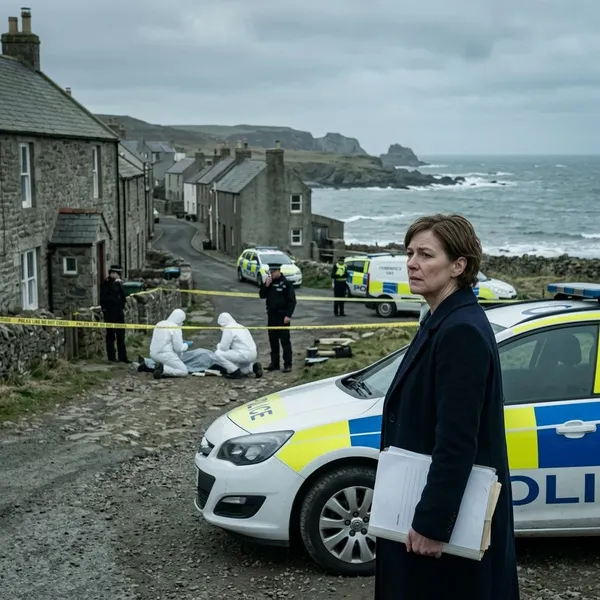
Episode 4 summary and spoilers
Episode 4 is the payoff chapter. It pulls together the murders, Snape's ledger, the money trail, Luke's role, and the truth about Anaïs's family. The finale is busy, but the central answer is clear: the deaths were tied to a broader conspiracy, and Anaïs's family was far more entangled in it than she believed.
Snape's ledger reveals the money trail
Snape's ledger is the key because it changes the case from suspicion to proof. Earlier episodes offer strange deaths, evasive behavior, and scattered clues; the ledger shows how money moved and who was connected.
That makes the finale feel more earned than a twist based only on confession. The conspiracy is not just emotional betrayal. It is a practical system, and the ledger exposes the system's working parts.
Anaïs uncovers the truth about her family
Anaïs learns that her father and Lynne were not standing outside the danger she has been investigating. They were caught inside it, and that truth breaks the simpler version of her family story.
The painful part is not only what happened, but how long Anaïs lived with an incomplete explanation. For viewers who care most about the family mystery, this is the finale's real answer: Lynne's death belongs to the same chain of corruption, cover-up, and fear that drives the season's murders.
Luke's role in the conspiracy comes to light
Luke's involvement lands hard because he is part of Anaïs's emotional past. A random corrupt figure would explain the plot, but Luke's role damages Anaïs personally.
His reveal also changes how earlier scenes read. Moments that could have seemed like concern, distance, or awkward history now carry another possibility: he may have known more than he was willing to say.
Maja's death delivers the final shock
Maja's death is the finale's last emotional blow. Because she is tied to both Anaïs and Luke, her murder is not just another body added to raise the stakes; it tears through the already fragile personal circle around Anaïs.
The season ends with enough answers to make the main mystery feel solved, but Maja's death keeps the aftermath alive. If the show continues, the next story would not need to reopen the same mystery from scratch; it could begin with the consequences of what Anaïs now knows.
Conclusion
Season 1 works because the murders are never just puzzles; each one strips away another layer of the story Anaïs has been living with since Lynne's death. The finale gives the major answers through the ledger, the family revelations, Luke's exposure, and Maja's death, but it does not make those answers feel clean. The practical takeaway is that the show is best watched as one connected mystery, not as four interchangeable cases.
FAQS
How many episodes are in A Remarkable Place to Die Season 1?
Season 1 has four main episodes or story blocks. Some listings may split the broadcast differently, but the central season structure follows four connected investigations.
Are the episodes standalone or connected?
They are connected. Each episode has its own murder case, but the clues steadily feed into Anaïs's family mystery and the Queenstown conspiracy.
Is Maja's murder solved in Season 1?
Yes, Maja's death is addressed as part of the finale's larger reveal. The emotional fallout, however, is left open rather than neatly settled.
Is there a Season 2 of A Remarkable Place to Die?
The Season 1 ending leaves room for another chapter, especially after Maja's death and Luke's exposure. Whether Season 2 happens depends on the official renewal decision from the broadcaster or streaming platform.