What Happens in A Nearly Normal Family?
Get a nearly normal family episodes summary with the full plot, key twists, trial outcome, and ending explained.
If you need a nearly normal family episodes summary with the ending included, the short version is this: Stella Sandell is arrested for killing Christoffer Olsen, but the case against her weakens once the truth about Christoffer's behavior comes out in court. The Netflix series is less about a neat whodunit than about how Stella, Adam, and Ulrika each hide pieces of the truth until the family can no longer protect its "normal" image.
How does the murder case begin?
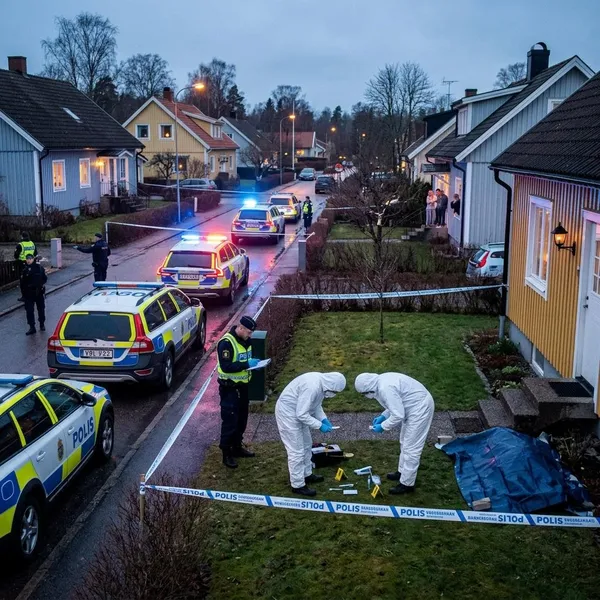
The murder case begins when 19-year-old Stella Sandell is arrested for the death of Christoffer Olsen. From that point, the series moves between Stella's silence, Adam's panic, and Ulrika's legal instincts, showing how quickly a respectable family can lose control of its own story.
Stella is arrested for Christoffer's murder
Stella's arrest turns an ordinary family crisis into a criminal one. Adam, a priest, and Ulrika, a lawyer, are suddenly forced to deal with police suspicion, legal risk, and the possibility that their daughter may spend her life associated with murder.
The show uses the arrest as the break in the family's polished surface. Before it, the Sandells can still appear stable from the outside; after it, every conversation feels like evidence, damage control, or denial.
Her past trauma resurfaces
Stella's guarded behavior makes more sense once her earlier trauma starts to resurface. She does not react like someone calmly trying to clear her name, but the series gives enough context to show that silence can come from fear and shame as much as guilt.
Adam and Ulrika hide key details
Adam and Ulrika both make the case messier by withholding information. Adam acts from panic and paternal instinct, while Ulrika understands the legal danger but is still too emotionally involved to stay cleanly objective.
- Adam's mistake: he treats protection as permission to bend the truth.
- Ulrika's conflict: she knows the system, but she is still Stella's mother first.
- The result: their secrecy makes the family look less credible when credibility matters most.
The family begins to fall apart
The arrest does not create every problem in the Sandell family; it exposes problems that were already there. Stella feels alone, Adam becomes more desperate, and Ulrika is forced to face how fragile the family's trust has become.
Why does Stella become the main suspect?
Stella becomes the main suspect because the investigation can connect her to Christoffer, to the relevant night, and to a possible motive. None of that automatically proves murder, but together it gives the police and prosecution enough to build a damaging theory.
Evidence places Stella near the crime scene
Stella's connection to the time and place of Christoffer's death is one of the first reasons the investigation narrows around her. She had a recent link to him, and the timeline makes it difficult for the police to dismiss her as unrelated.
That is the key distinction: the evidence makes her a believable suspect, not a clearly proven killer. The show depends on that gap between "this looks bad" and "this is legally certain."
A witness connects her to that night
A witness account strengthens the idea that Stella was part of the events surrounding Christoffer's death. Even a partial observation can shape a case when police are trying to build a timeline.
Adam's lies increase suspicion
Adam's lies do not protect Stella in the way he hopes. They make investigators wonder why a respected father and priest would risk dishonesty unless there is something serious to hide.
This is one of the show's sharper moral points: love may explain Adam's choices, but it does not make them wise. His interference gives the prosecution a cleaner emotional argument against the family, even when his motive is fear rather than cruelty.
Stella refuses to reveal the full truth
Stella's silence leaves space for other people to define the story for her. Her parents want answers, the police want a coherent timeline, and the court later needs facts, but Stella keeps holding back because the full truth is painful and dangerous to say out loud.
That is why the middle of the series can feel frustrating in a deliberate way. Stella is not simply refusing to help the plot move forward; she is behaving like someone who has learned that telling the truth may not make her safer.
How does the trial end?
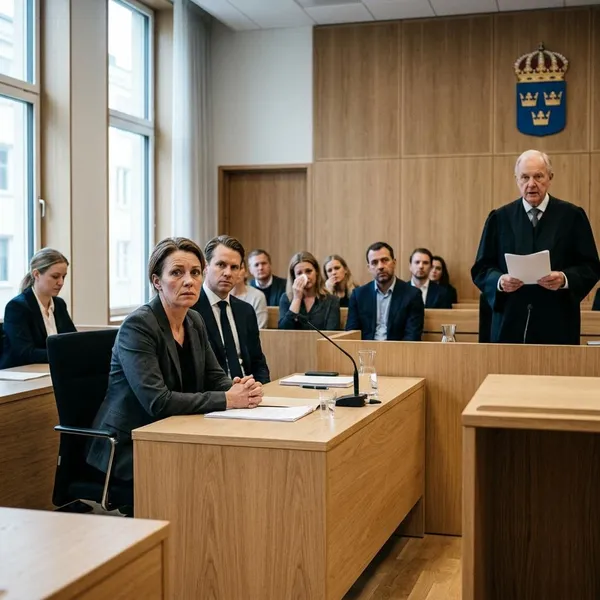
The trial ends with Stella being found not guilty. The turning point is Amina's testimony, which gives the court a different understanding of Christoffer and weakens the prosecution's version of what happened.
Amina reveals what Christoffer did
Amina reveals crucial information about Christoffer's conduct, shifting him away from the simpler image of a victim with no darker context. Her testimony helps explain why Stella's fear, anger, and silence cannot be understood through the prosecution's version alone.
The reveal works because it does not feel like a random twist. It connects back to the show's larger concern with young women not being believed, private harm staying hidden, and trauma shaping behavior that outsiders may misread.
Her testimony changes the case
Amina's testimony changes the case by making the prosecution's story look too narrow. Before she speaks, Stella can be framed as a volatile young woman with motive and opportunity; afterward, Christoffer's behavior becomes part of the court's understanding.
- Motive becomes less simple: Stella's actions can be read through fear and self-protection.
- Credibility shifts: the court hears context that had been missing.
- The timeline weakens: the same facts no longer point as cleanly toward guilt.
The prosecution cannot prove Stella's guilt
The prosecution fails because suspicion is not enough for a murder conviction. Once Amina's testimony changes the context, the evidence against Stella no longer feels strong enough to remove reasonable doubt.
That ending fits the tone of the series. It gives a legal answer without pretending that the emotional truth is tidy, comforting, or fully resolved.
Stella is found not guilty
Stella is acquitted and the murder case against her ends. The verdict releases her from immediate legal danger, but it does not erase what happened with Christoffer, what was exposed in court, or what her family did while trying to protect her.
What happens to the Sandell family?
After the verdict, the Sandell family is still together in a basic sense, but not restored to what it was before. Stella leaves custody, Adam faces the cost of his choices, and Ulrika begins moving out of crisis mode into a more honest reckoning with her life.
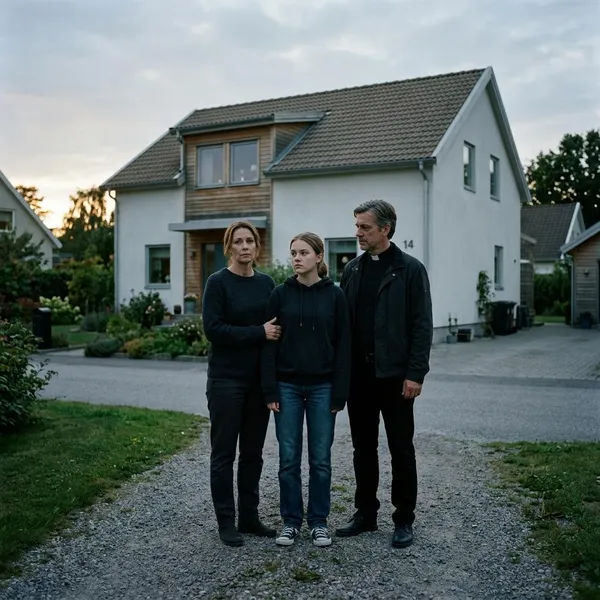
Stella finally leaves police custody
Stella's release is the clearest practical result of the not guilty verdict. She is no longer being held as the person legally responsible for Christoffer's death.
Freedom, though, is not shown as a clean reset. For a viewer expecting a triumphant ending, this may feel muted, but that restraint is the point: Stella has survived the legal case, not escaped the emotional aftermath.
Adam steps away from the church
Adam stepping away from the church shows that the case has damaged more than his family life. His public role was built around moral guidance, and his private choices during Stella's case make it hard for him to continue as if nothing has changed.
His arc is not simply "good father makes mistakes." It is more uncomfortable than that: he loves Stella deeply, but his fear leads him into deception, and the series allows that to have a real consequence.
Ulrika begins rebuilding her life
Ulrika's ending is quieter, but it carries its own weight. She has to rebuild after living as both a legal thinker and a terrified mother, two roles that repeatedly pull against each other.
Her future is left open rather than neatly solved. That feels right for a character who has spent much of the series managing damage instead of admitting how much damage already existed.
The family starts confronting its past
The Sandells begin confronting the past by dropping the illusion that silence has protected them. Stella's trauma, Adam's moral compromises, and Ulrika's controlled distance all become impossible to keep separate from the murder case.
Two viewing situations help make sense of the final mood: if you came for a crime ending, the answer is that Stella is acquitted; if you came for the family drama, the answer is that the verdict only opens the harder work. The show closes the case but leaves the family with honesty as a first step, not a cure.
Conclusion
A Nearly Normal Family ends with Stella found not guilty, but the verdict is not treated as a happy reset button. The real takeaway is that the court can close the murder case, while the Sandells still have to live with trauma, secrecy, and the damage caused by trying to protect one another at almost any cost.
FAQS
Is A Nearly Normal Family based on a book?
Yes. The Netflix series is adapted from Mattias Edvardsson's novel A Nearly Normal Family, which also uses shifting perspectives to examine the Sandell family and the murder case.
Is A Nearly Normal Family based on a true story?
No. It is a fictional story, although its legal pressure, family secrecy, and trauma themes are written in a realistic style.
Is A Nearly Normal Family a limited series?
Yes. Netflix presents it as a six-episode limited series, and the main murder case reaches a clear verdict by the end.