What Happens in A Man on the Inside Seasons 1 and 2?
Need a fast a man on the inside episodes summary? Review both seasons, major reveals, and finale outcomes before you rewatch.
If you are trying to catch up fast, this a man on the inside episodes summary is really about two things at once: the case Charles is solving and the reason that case matters to him emotionally. Season 1 starts with missing jewelry at Pacific View, while Season 2 moves to Wheeler College, where a stolen laptop leads to Project Aurora and Holly's reveal. The useful way to follow both seasons is to track the culprit last, but the motive and Charles's choices first.
How does Season 1 unfold?
Season 1 begins like a light undercover mystery, but it works best as a story about grief, trust, and late-life friendship. If you only remember the jewelry theft, you miss the more important shift: Charles enters Pacific View pretending to be detached, then slowly becomes part of the place he is investigating.
Charles goes undercover at Pacific View
Charles Nieuwendyk is a retired professor and widower when private investigator Julie hires him to move into Pacific View Retirement Community. His job is simple on paper: blend in, observe residents and staff, and help find out what happened to missing jewelry.
The jewelry case leads to several suspects
The missing jewelry points in more than one direction. Staff, residents, and people close to the victim all seem possible at different moments, but the show keeps reminding the viewer that suspicious behavior is not always criminal behavior.
Charles grows close to the residents
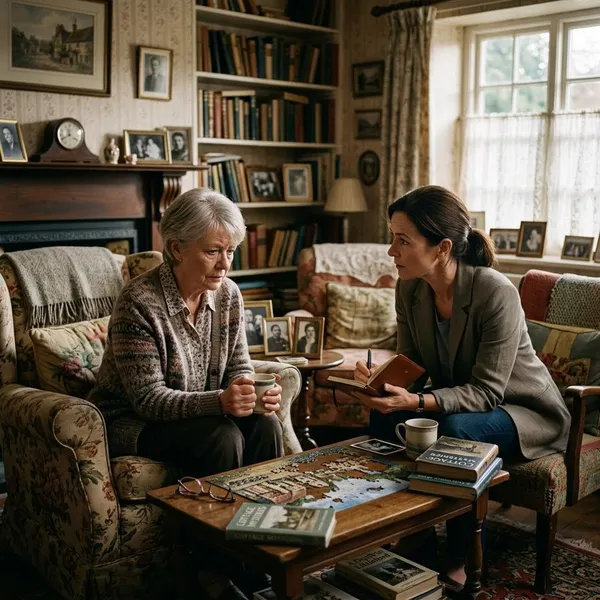
Charles's bond with Calbert and the other residents becomes the emotional center of the season. He is not just collecting information anymore; he is eating with people, listening to them, and becoming someone they expect to see.
That makes the undercover lie more uncomfortable. For a viewer rewatching the season, this is the point where the case stops being only about who took the jewelry and starts being about whether Charles can keep the trust he is accidentally earning.
Emily becomes part of the investigation
Emily, Charles's daughter, helps show how much the case changes him from the outside. She worries because the whole arrangement is strange, but she also sees him becoming sharper, busier, and more emotionally present than he has been in a long time.
The mystery reveals a more emotional truth
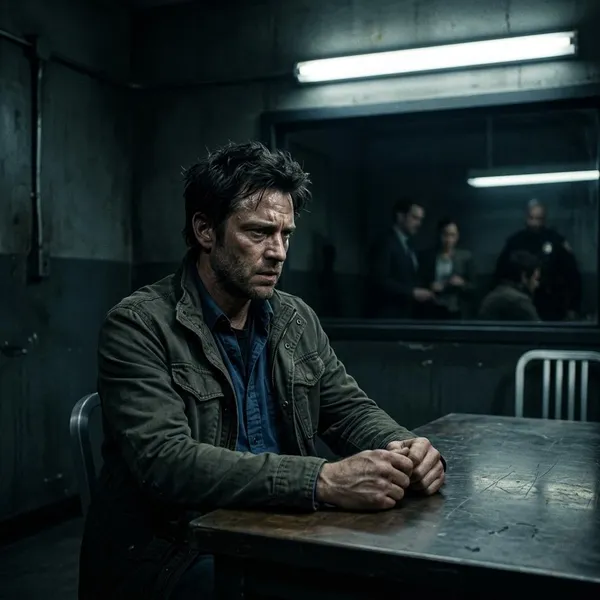
The answer to the jewelry mystery is not a clean villain reveal. The missing items are tied to an Alzheimer's patient, which reframes the case around confusion, vulnerability, and care rather than simple theft.
That is the key to Season 1: the mystery gives the plot shape, but compassion gives it meaning. Charles solves the case by noticing clues, yet he understands the truth only when he starts seeing the residents as people instead of suspects.
How does Season 1 end?
Season 1 ends by resolving the jewelry case, but the harder ending is Charles admitting why he came to Pacific View in the first place. The finale is less about punishment and more about whether relationships built under false pretenses can survive once the truth comes out.
The missing jewelry is finally traced
The jewelry is traced back to a resident affected by Alzheimer's. That answer makes earlier confusion around timelines, missing objects, and unreliable memories feel less like plot tricks and more like signs the viewer was meant to read with empathy.
Charles reveals his undercover mission
After the case is solved, Charles tells the residents that he was working with Julie. It is the right thing to do, but it still hurts people who believed he had entered their lives honestly.
Calbert's reaction matters because it keeps the finale from becoming too easy. Charles did care about the residents, but good intentions do not erase the fact that he hid the truth from them.
His friendships survive the truth
The friendships are damaged, not destroyed. Pacific View does not instantly forgive Charles in a neat sitcom way, but the residents can tell that the connection was real even if the original reason for his arrival was not.
The case gives Charles a new purpose
By the end of Season 1, Charles has proof that he is still useful, observant, and capable of forming new bonds. The most important result is not that he helped close a case; it is that he no longer seems trapped in the smallest version of his life.
How does Season 2 unfold?
Season 2 shifts from an intimate retirement-community mystery to a broader campus case. Wheeler College has more politics, more public pressure, and more people with something to lose, so Charles has to read motives more carefully than he did at Pacific View.
Charles goes undercover at Wheeler College
Charles enters Wheeler as a visiting lecturer, which gives him a believable reason to move through faculty spaces and campus events. He is more experienced now, but the setting is less forgiving: professors, administrators, donors, and students all have their own version of what Wheeler should become.
Beringer's stolen laptop starts the case
The case begins when President Jack Beringer's laptop is stolen while Wheeler is trying to secure a major donation from billionaire alumnus Brad Vinick. Soon after, threats from someone calling themselves the Wheeler Guardian make the theft look like blackmail.
Mona complicates Charles's mission
Mona, a music instructor, brings warmth and romantic possibility into Charles's life. That creates a different kind of tension from Season 1 because Charles already knows how badly secrecy can damage a genuine connection.
Instead of repeating the Pacific View mistake, he is more open with Mona about what he is doing. Their relationship matters even if it does not become permanent, because it shows Charles testing whether he can want a future again without treating it as a betrayal of his past.
Project Aurora reveals the real threat
Project Aurora is the major turn. Vinick's donation is not just a generous rescue plan; it comes with a hidden vision for reshaping Wheeler, including changes that would weaken departments, shift power, and remake the college around his priorities.
Once Project Aurora is revealed, the moral center of the season changes. The Wheeler Guardian campaign no longer looks like random sabotage. It starts to look like a desperate attempt to stop a takeover disguised as help.
The investigation points back to Wheeler staff
Charles and Julie eventually realize the case is coming from inside Wheeler. The strongest suspects are not outsiders chasing money but staff and faculty who believe the college is being sold out from within.
- Beringer has access: his role puts him close to the donor plan and the stolen laptop.
- Dr. Cole has motive: he represents the academic values Project Aurora threatens.
- Holly has proximity and purpose: her position lets her see what the public is not meant to see.
How does Season 2 end?
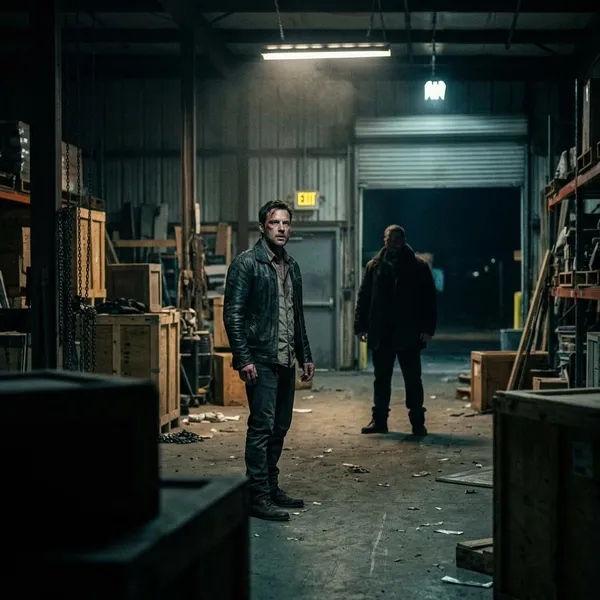
Season 2 ends by revealing Holly's central role in the anti-Vinick campaign, but it does not treat the answer as a simple good-versus-bad twist. The finale asks whether protecting an institution can excuse deception, and it lets Charles choose mercy without pretending the choices were clean.
Charles uncovers Holly's full plan
Holly Bodgemark is the main architect behind the resistance. After learning what Beringer and Vinick were planning through Project Aurora, she steals the laptop and helps create pressure to stop the deal before Wheeler is changed permanently.
Charles's decision not to simply destroy her is important. He understands that Holly broke rules, but he also sees that her motive was to protect Wheeler from a corrupt bargain.
Charles and Mona part as friends
Mona gets an opportunity to teach in Croatia and invites Charles to come with her. It is a real temptation, especially because she has helped him feel romantic possibility again.
He chooses not to go. For someone watching mainly for Charles's arc, this is the cleanest sign of his growth: he no longer needs escape to prove he is alive. He has a home, work, family, and friendships that he is not willing to leave behind.
Julie and Didi grow closer
Julie and Didi's relationship moves forward in a quieter way. Julie apologizes for keeping her distance, while Didi admits that part of the reason she brought Julie closer was because she wanted more time with her.
Dr. Cole finds a place at Pacific View
After leaving Wheeler, Dr. Cole could easily be left as collateral damage. Instead, Charles sends him toward Pacific View, where Didi gives him a practical place to start again through the library refurbishment.
That matters because Pacific View has already been established as a place where people can recover purpose. Dr. Cole loses status, but he is not treated as useless.
The bonus scene reunites the community
The bonus scene brings familiar faces together at Pacific View for a book club, with Charles, Dr. Cole, Calbert, and others gathered around The Hunt for Red October. It is not a cliffhanger so much as a warm reminder of what the series values most.
How does Charles change across both seasons?
Charles's change is gradual rather than dramatic. He does not become a different person; he becomes a more awake version of himself, someone who can grieve, investigate, make friends, and still choose where he belongs.
Grief pushes him toward the first case
At the start, grief has made Charles's life smaller. Julie's case gives him a reason to leave his routines, but the show is careful not to suggest that one mystery "fixes" loss.
The healthier reading is that Pacific View gives him motion. For viewers dealing with a similar kind of stuckness in a character arc, that distinction matters: Charles is not escaping grief, he is learning how to live with it while doing something meaningful.
Pacific View gives him new friendships
Pacific View gives Charles what the investigation alone cannot: people who expect him, challenge him, and care whether he shows up. Calbert is the clearest example, but the broader community becomes just as important.
Detective work restores his confidence
Detective work reminds Charles that his mind still matters. He notices patterns, reads people, and solves problems without needing to become a flashy hero.
By Season 2, that confidence has become steadier. He can handle a more complicated environment, make judgment calls under pressure, and accept that being useful again is not the same as being invulnerable.
Mona opens him to romance again
Mona helps Charles see that romance after grief is possible without cheapening what he had with his late wife. Their connection is tender because it is not treated as a replacement story.
Her role is especially useful if you are tracking Charles's emotional timeline: Season 1 reconnects him to friendship, while Season 2 tests whether he can imagine intimacy again.
Charles chooses community over escape
Charles's choice to stay instead of leaving for Croatia completes the two-season arc. Earlier, a new place might have looked like the answer. By the end, he understands that the life he has rebuilt is not something to run from.
Conclusion
The cleanest way to remember both seasons is that each case gives Charles a different test: Pacific View teaches him to reconnect, and Wheeler College teaches him to choose the life he has rebuilt. The mysteries are satisfying because they have answers, but the reason they stay with you is Charles's final direction of travel: not away from grief, not away from people, but toward a community he is finally willing to call his own.
FAQS
Who is the culprit in Season 2?
Holly Bodgemark is the key person behind the Season 2 sabotage. Dr. Cole takes public blame, but Charles realizes Holly drove the plan to stop Project Aurora.
What is Project Aurora?
Project Aurora is Brad Vinick's hidden plan to reshape Wheeler College after his donation. The danger is not just the money; it is the control attached to it.
What happens to Charles and Mona?
Charles and Mona part warmly rather than staying together. She goes toward her Croatia opportunity, and he chooses the community and purpose he already has.