What Happens in A Gentleman in Moscow?
Read a gentleman in moscow episodes summary with key plot points, character arcs, and the ending explained. Discover how it all unfolds.
If you want a gentleman in moscow episodes summary with the ending made clear, the main thread is simple: Count Alexander Rostov is trapped inside the Metropol Hotel, but his life keeps expanding through Nina, Anna, and Sofia. The first episodes are about punishment and adjustment; the middle turns the hotel into a home; the finale becomes a carefully planned escape built around Sofia's future.
How does Rostov's life at the Metropol begin?
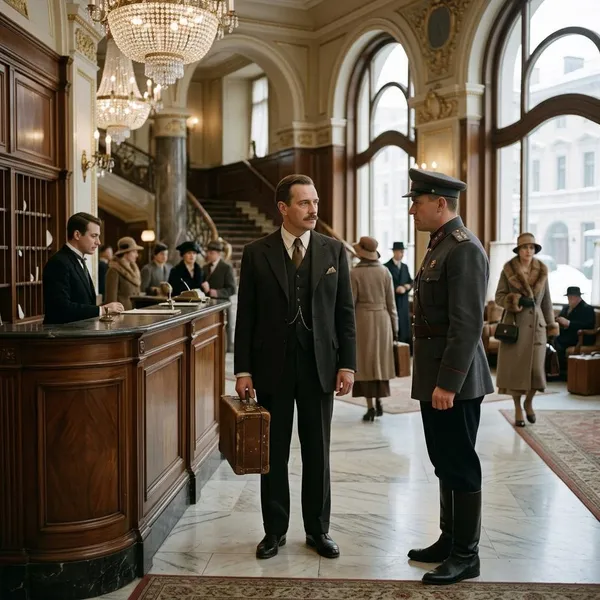
Rostov's life at the Metropol begins as a sentence, not a choice. The early episodes matter because they show the rules of his new world: he may live, but only if he never leaves the hotel. If you are trying to keep the story straight, watch the opening as a shift from public identity to private survival.
Rostov is sentenced to lifelong house arrest
After the revolution, Count Alexander Rostov is judged as a surviving symbol of the aristocratic past. Instead of being executed, he is ordered to remain inside the Metropol Hotel for the rest of his life.
The sentence is cruel because it does not only remove movement. It removes usefulness, status, and the future he assumed he would have. That is the pressure behind almost every later choice he makes.
He is moved from luxury to a small attic room
His move from elegant rooms to a cramped attic makes the punishment visible. The hotel still looks grand, but Rostov's place inside it has changed completely.
- What he loses: space, rank, comfort, and control.
- What he keeps: manners, memory, taste, and self-command.
- What slowly changes: the attic becomes less like a humiliation and more like a private corner of a new life.
Nina introduces him to the hidden life of the hotel
Nina changes the Metropol from a beautiful cage into a place with secrets, routes, routines, and people Rostov had never truly noticed. Her curiosity gives him a way to look outward instead of only grieving what he has lost.
Anna becomes an important part of his new world
Anna Urbanova brings adult intimacy, wit, and risk into Rostov's confined life. Their relationship begins with attraction, but it becomes important because Anna understands performance and survival in a political world where a wrong move can carry consequences.
She is also one of the first people who sees Rostov as more than a fallen count. With Nina, he discovers the hotel's hidden spaces; with Anna, he discovers that emotional life has not ended just because his public life has.
How does Rostov adapt to his confinement?
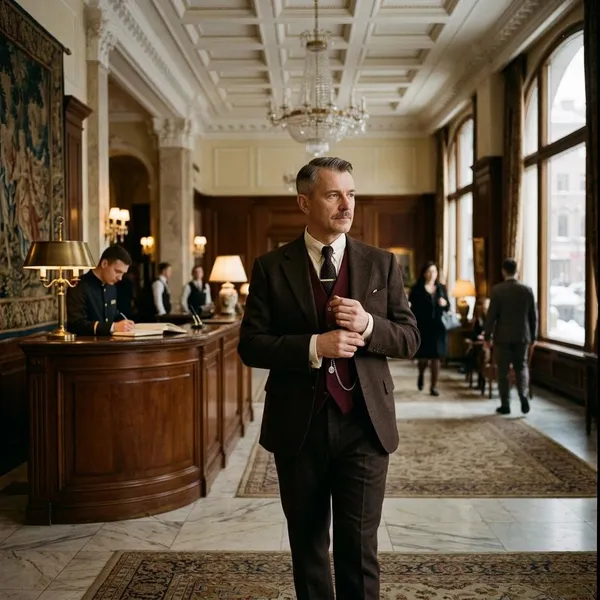
Rostov adapts by building a life small enough to survive but meaningful enough not to feel empty. The useful way to read the middle episodes is not "he accepts prison," but "he learns what still belongs to him when almost everything else has been taken."
Loss forces him to rethink his identity
Without title, estate, and freedom of movement, Rostov has to decide what makes him himself. The series answers gradually: not rank, but character; not ceremony, but loyalty; not the old social order, but the way he treats people when no one owes him respect.
Work gives him a new purpose
Work gives Rostov structure. Inside the hotel, usefulness becomes a kind of rescue: he can contribute judgment, taste, calm, and discipline instead of simply waiting out the years.
This is one of the more grounded parts of the story. In a real-life sense, a person going through a long disruption often needs routine before they can make sense of the bigger loss. Rostov's work does that for him without pretending the sentence is fair.
Friendship replaces the life he once knew
Rostov's old world was built around class; his new one is built around trust. The hotel staff, close visitors, and chosen companions become more important than the formal society he can no longer enter.
The Metropol becomes his true home
The Metropol begins as the place that confines him, but over time it gathers the marks of home: routines, meals, work, memories, affection, and responsibility. The important nuance is that the hotel never stops being a prison. It becomes home anyway.
That tension is what gives the later episodes their emotional weight. Leaving the Metropol eventually matters because Rostov is not escaping an empty room; he is leaving the only life he has been allowed to build.
How does Sofia change Rostov's life?
Sofia changes the story from survival to responsibility. Before she arrives, Rostov is trying to preserve dignity inside confinement. After she arrives, the main question becomes sharper: what kind of future can he protect for a child who should not have to inherit his cage?
Sofia arrives unexpectedly at the hotel
Sofia enters Rostov's life through Nina, and her arrival feels sudden because Rostov is not prepared to become a parent figure. What starts as care given in a difficult moment becomes the emotional center of the series.
The connection to Nina matters. Nina once opened the hotel for Rostov; Sofia gives that same hotel a new purpose. The story stops being only about what Rostov has lost and becomes about what he can still give.
Rostov becomes her guardian
Rostov becomes Sofia's guardian in practice: he feeds her, teaches her, protects her, and makes space for her to grow. The role changes him because love now has daily duties attached to it.
Their bond turns the hotel into a family home
With Sofia there, the Metropol becomes more than Rostov's workplace and prison. It becomes a family home built from unlikely pieces: hotel routines, trusted staff, shared meals, music, and adults quietly looking out for a child.
Sofia's future becomes Rostov's main priority
By the final episodes, Sofia's musical talent gives Rostov a reason to think beyond the hotel walls. Her future becomes the clearest test of his love: keeping her close would be emotionally easier, but helping her leave may be the only way to give her real freedom.
If you are rewatching before the finale, this is the point to track carefully. The escape is not a sudden twist; it grows out of years of guardianship, quiet planning, and Rostov's acceptance that Sofia's life must become larger than his own.

How does A Gentleman in Moscow end?
A Gentleman in Moscow ends with Sofia leaving the Soviet Union, Rostov defeating the immediate threat inside the hotel, Anna helping the plan succeed, and Rostov finally walking out of the Metropol. The ending is not just about escape. It asks whether a person can be free after spending years learning to call confinement home.
Sofia escapes the Soviet Union
Sofia's escape is tied to her piano career, which gives her departure a public reason and a private purpose. She leaves for a future outside Soviet control, carrying the life Rostov helped shape but could not fully share.
For anyone confused by the ending, Sofia is the emotional priority of the finale. The plan succeeds because Rostov chooses her freedom over his own comfort and over the safety of keeping things as they are.
Rostov confronts the Bishop
Rostov's confrontation with the Bishop pays off years of humiliation, suspicion, and petty cruelty. The Bishop represents the kind of small power that becomes dangerous when it is backed by a larger system.
The satisfying part is not that Rostov suddenly becomes reckless. He acts decisively while remaining recognizably himself: controlled, observant, and willing to risk himself when the stakes finally demand it.
Anna helps complete the escape plan
Anna's role in the ending is active, not decorative. Her intelligence, courage, and understanding of appearances help make the escape possible.
That fits her character. Anna has always known how public performance and private truth can collide, so her help in the finale feels earned rather than convenient.
Rostov finally leaves the Metropol
Rostov leaving the Metropol is powerful because it is both liberation and farewell. The building took his freedom, but it also became the place where he found work, friendship, love, and fatherhood.
- As a plot moment: he crosses the boundary that defined most of his adult life.
- As an emotional moment: he leaves behind the home he made under impossible conditions.
His final choice redefines freedom and home
Rostov's final choice suggests that freedom is not only the ability to go anywhere. It is the ability to act according to love, loyalty, and conscience. Home is not reduced to the Metropol either; it becomes the people and meanings that survived inside it.
That is why the ending feels bittersweet instead of simply triumphant. Sofia gains a future, Rostov regains choice, and the hotel remains both the site of his punishment and the place where his life became deepest.
Conclusion
The cleanest way to understand the series is to follow what Rostov protects at each stage: first his dignity, then his friendships, then Sofia's future. The ending works because it does not pretend confinement was harmless, but it also refuses to make Rostov's life inside the Metropol feel wasted. His real freedom comes from the choices he makes for the people he loves.
FAQS
How many episodes are in A Gentleman in Moscow?
There are eight episodes in A Gentleman in Moscow. It was made as a limited series, so the season is designed to tell Rostov's full arc from sentencing to final escape.
What happens to Count Rostov at the end?
Count Rostov helps Sofia escape, outmaneuvers the Bishop, and finally leaves the Metropol. His ending is about reclaiming choice after decades of forced confinement.
Is there a Season 2 of A Gentleman in Moscow?
There is no confirmed Season 2. The show was released as a limited series, and the finale gives closure to Rostov, Sofia, Anna, and the Metropol storyline.