What Happens in 1883 from Start to Finish?
Read this 1883 tv series episodes summary to follow the wagon train, key deaths, Elsa's journey, and Yellowstone links.
If you want the full 1883 tv series episodes summary, the most important thing to know is that the season is a complete, spoiler-heavy origin story for the Dutton family's Montana ranch. The journey starts in Texas, becomes more punishing with every mile, and ends with Elsa Dutton's death shaping where the family finally settles. It works best as a tragic frontier story first and a Yellowstone prequel second.
What happens at the beginning of 1883?
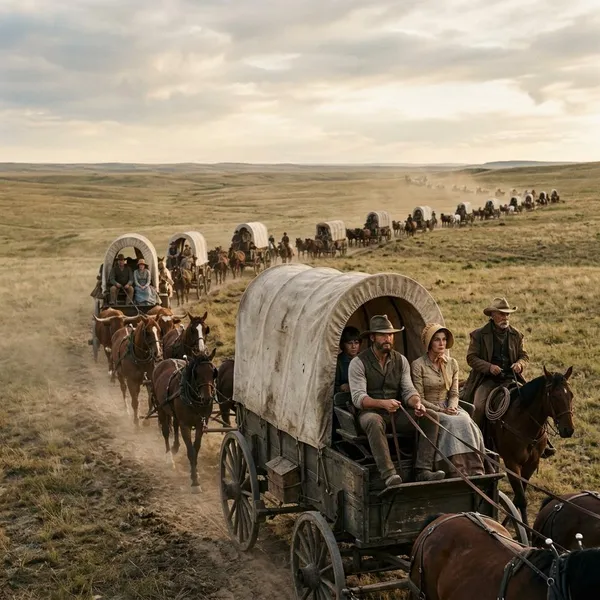
1883 opens with the Dutton family moving through a violent, unstable Texas before joining a wagon train headed west. The early episodes do two jobs at once: they introduce the people who will carry the season, and they make it clear that the trail is not a clean adventure story. It is a test of who can adapt fast enough to stay alive.
The Dutton family prepares to leave Texas for the West
James Dutton reaches Fort Worth first and quickly shows why he is dangerous, practical, and hard to intimidate. When Margaret, Elsa, young John, Claire, and Mary Abel arrive, the family's risks become more personal. Fort Worth is crowded and lawless, and Elsa's near assault pushes James toward the decision to travel with a larger group instead of trying to protect his family alone.
Shea Brennan and Thomas organize the immigrant wagon train
Shea Brennan begins the series already hollowed out by grief. Smallpox has killed his wife and daughter, and burning his house is his way of cutting himself off from the life he cannot return to. Thomas, steadier and less visibly broken, becomes the partner who helps him keep moving.
Together, they are hired to guide European immigrants toward Oregon. The group has hope, but very little trail sense. Josef translates and often speaks for them, which keeps the immigrants from becoming faceless victims; they are desperate families, not fools, but their lack of preparation makes every mile more dangerous.
Disease and violence reveal how dangerous the journey will be
The season does not wait long to show its rules. Disease can spread through a camp before anyone understands the danger, and violence can appear in town, on the road, or around the wagons. Shea and Thomas often seem harsh because they already know what the immigrants have not learned yet: a small mistake can become a group disaster.
The travelers struggle to adapt to life on the trail
Basic trail life is harder than many of the travelers expect. Cooking, handling animals, packing wagons, finding water, and following instructions all become survival skills. The immigrants are not just learning a new routine; they are learning that delay, pride, and confusion can kill.
Elsa reacts differently. While many people feel the trail taking things away, she feels it giving her space. That contrast becomes one of the season's strongest early signals: the same frontier that destroys some people also awakens something in her.
How does the wagon train's journey become more dangerous?
The danger grows because the wagon train keeps losing the protections of settled life. At first, the travelers can still imagine that hardship is temporary. Once they face rivers, storms, bandits, shortages, and fear inside the group, it becomes clear that the journey is filtering people by preparation, nerve, and luck.
The group faces deadly river crossings
The river crossings are some of the clearest examples of the show's realism. A river is not treated as scenery or a brief obstacle. It can take wagons, animals, food, family members, and confidence in a matter of minutes.
Poor preparation leads to preventable deaths
Many deaths in 1883 hurt because they could have been avoided under better conditions. The immigrants often lack swimming ability, firearm experience, animal-handling skills, and the habit of obeying trail commands immediately. The show keeps returning to that uncomfortable point without turning it into a lecture.
- They start with the wrong assumptions. Having guides is not the same as being ready.
- They carry too much. Heavy wagons slow the group and make crossings more dangerous.
- They panic under pressure. Fear spreads quickly when people do not trust the rules.
- The strongest travelers pay too. Rescues and delays put capable people at risk alongside the unprepared.
Bandits and other threats test the travelers
Human threats become more serious as the caravan moves farther from towns and law. A wagon train full of frightened civilians, livestock, and supplies is an obvious target. James, Shea, Thomas, and the cowboys become essential because they can respond quickly when hesitation would cost lives.
Tension grows between survival and compassion
One of the best conflicts in the season is that kindness is not always safe. Shea may want to save people, but he knows that stopping too long or bending the rules for one person can endanger everyone else.
James brings a different pressure because his own family is inside the caravan. Margaret sees the moral cost of the journey from a mother's point of view, while Thomas often provides the calmest balance between mercy and discipline. None of them get clean choices for long.
How does Elsa Dutton change during the journey?
Elsa changes from a curious, sheltered young woman into the emotional center of the season. Her story is not only about growing tougher. It is about discovering freedom, being shattered by grief, and still choosing to live intensely while the trail gives her less and less time.
Elsa embraces the freedom of life on the frontier
Elsa is drawn to the openness of the plains almost immediately. She rides, observes, learns from the cowboys, and begins to see herself outside the rules that shaped her earlier life. Where others feel exposed, she feels enlarged.
This is useful to remember if you are watching mainly for the Dutton family history: Elsa is not just a tragic daughter in the timeline. She is the first character who makes the land feel like something the family could belong to, not merely a place they pass through.
Her relationship with Ennis brings love and devastating loss
Ennis gives Elsa her first real taste of love on the trail. Their relationship is warm and impulsive, which fits her age and the speed of life around them. For a short time, she can imagine a future that feels chosen rather than forced.
His death breaks that possibility. Elsa loses more than a person she loves; she loses the version of the West that felt purely open and romantic. After Ennis, the frontier still calls to her, but it no longer feels innocent.
Grief makes Elsa more independent and fearless
After Ennis dies, Elsa becomes bolder, sharper, and harder to restrain. That fearlessness can look like strength, but it also carries danger. She has no safe place to mourn, so she turns grief into movement.
Meeting Sam changes how Elsa sees her future
Sam enters Elsa's life after she has already been altered by love and loss. Their bond feels different from her relationship with Ennis: less like first love and more like recognition. Through Sam, Elsa begins to imagine belonging to the land in a deeper, more permanent way.
What happens to the main characters by the end of 1883?
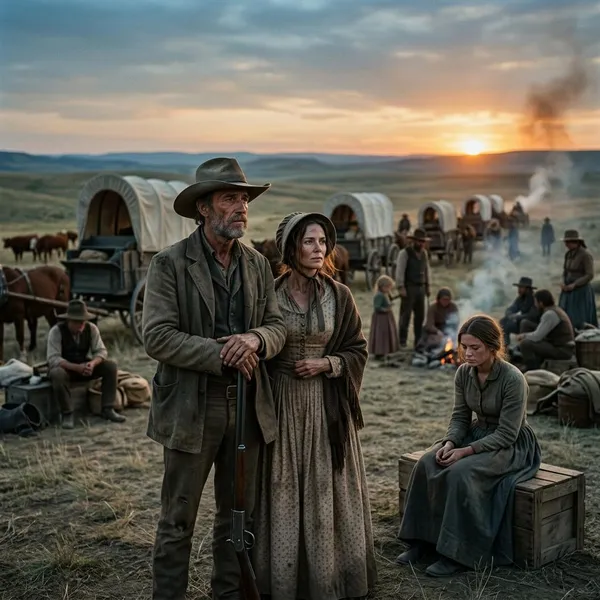
By the finale, 1883 has separated its characters into those who die, those who endure, and those who carry grief into the next chapter. The ending is not designed to feel victorious. Even the survivors are changed by what the trip has taken from them.
Elsa Dutton dies after completing her journey west
Elsa is fatally wounded by an arrow during an attack. There is brief hope, but the wound cannot be escaped, and her final days become the emotional center of the finale.
James Dutton begins building a new home in Montana
James settles in Montana through grief, not triumph. He does not simply find a promising piece of land and claim a better life. He stays because Elsa's death gives him a place he cannot leave behind.
That detail changes the meaning of the Dutton ranch in the wider franchise. The land begins as a burial place and a wound before it becomes power, property, or legacy.
Margaret Dutton stays with her surviving family
Margaret survives with James and John, but her ending is heavy rather than comforting. She has spent the season seeing danger clearly, protecting her children, and enduring the cost of decisions she could not fully control.
Shea Brennan fulfills the promise he made to his wife
Shea reaches the ocean, fulfilling the promise connected to the life he lost before the journey began. After seeing it, he takes his own life.
It is a bleak ending, but it fits the character. Shea was moving because duty gave him one last direction, not because his grief had healed. Once that promise is complete, he has no future he wants to enter.
Thomas and Noemi survive and pursue a future together
Thomas and Noemi provide one of the few genuinely hopeful endings. Their relationship grows out of trust, steadiness, and practical care rather than grand declarations.
In a season where the trail destroys so many families, their survival matters because it shows another possible outcome. The frontier takes lives, but it can also create a new household for people who adapt and protect each other.
How does 1883 connect to Yellowstone?
1883 connects to Yellowstone by showing how the Duttons reach Montana and why that land becomes sacred to the family. The link is not only geographic. It is emotional, because the ranch begins with Elsa's death and the family's decision to stay near her.
The journey explains how the Dutton family reaches Montana
In Yellowstone, the Duttons already have land, influence, and a long family history. 1883 shows the opposite: a vulnerable family moving west with no guarantee that they will survive, settle, or become important.
Elsa's fate influences the location of the future Dutton ranch
Elsa's death directly shapes where the family settles. James does not choose Montana only because it is useful or beautiful. He stays because Elsa is buried there.
That is the key connection between the prequel and the modern ranch. The land later defended in Yellowstone is tied to a daughter's grave before it is tied to business, politics, or family pride.
James and Margaret establish the next chapter of the Dutton family
James and Margaret end the season as grieving parents, not wealthy founders. Their importance is that they survive long enough to begin again and carry the family line forward.
The family story continues decades later in 1923
1923 continues the Dutton story after the family has already taken root in Montana. The pressure changes from reaching the land to keeping it through a different era of hardship.
- 1883 explains the arrival. The family reaches Montana through loss and survival.
- 1923 shows the next struggle. Later Duttons face new threats to the ranch and family line.
- Yellowstone shows the modern result. The land has become powerful, contested, and deeply personal.
Conclusion
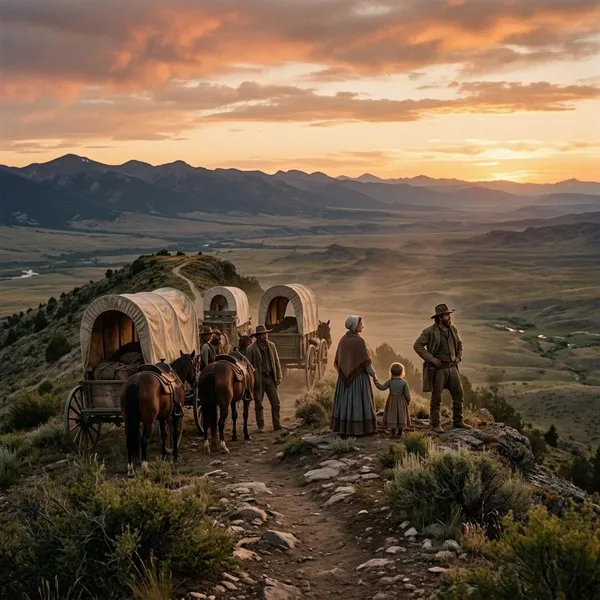
1883 is easiest to understand as a full-season tragedy about how the Duttons reach Montana and why that place becomes impossible for them to leave. The practical takeaway is simple: Elsa's journey gives the show its heart, her death gives the ranch its meaning, and the surviving characters carry that loss into the future of the family.
FAQS
How many episodes are in 1883?
1883 has 10 episodes. The season tells one complete arc, so there is no second season needed to finish Elsa's story or the Duttons' arrival in Montana.
Is 1883 a complete series?
Yes, 1883 is a complete limited series. The broader Dutton timeline continues in 1923 and Yellowstone, but the main story of this journey is resolved.
Why was Elsa killed off in 1883?
Elsa's death gives the Dutton ranch its origin. By dying in Montana, she becomes the reason James stops there, which ties the family's future land to grief rather than simple ambition.